Porsche 911 Deep Dive Investment Guide
Key Takeaways:
- Irreproducible homologation specials (RS 2.7, RS 3.0, 997 GT2 RS) with forever-closed regulatory windows create eight-figure upside
- Air-cooled G-Series, 964, 993: maintained steady demand and have the highest appreciation potential as the most refined eras
- Early long-hoods (911 F-Series, 1964-1973) command six-figure values in mint condition, with the purest original 911 body
- Newer water-cooled 911s, such as the 996, are gaining traction among younger investors, so investing now can place you ahead of the curve
- Rarity, condition, and certificates are key value drivers (ex: Porsche Classic Certificate validates originality)
The Porsche 911’s Enduring Allure
A 1998 Porsche 911 GT1 Strassenversion selling for $5.665 million shows how the irreproducibility of many 911 models translates into a blue-chip investment asset, shaped by regulatory and engineering constraints that no longer exist. The Porsche 911’s iconic status among collectors and enthusiasts is based on usefulness, universality, unobtrusiveness, and longevity. When you see a 911, you feel a sense of timelessness built on engineering excellence, design innovation, and driving pleasure.
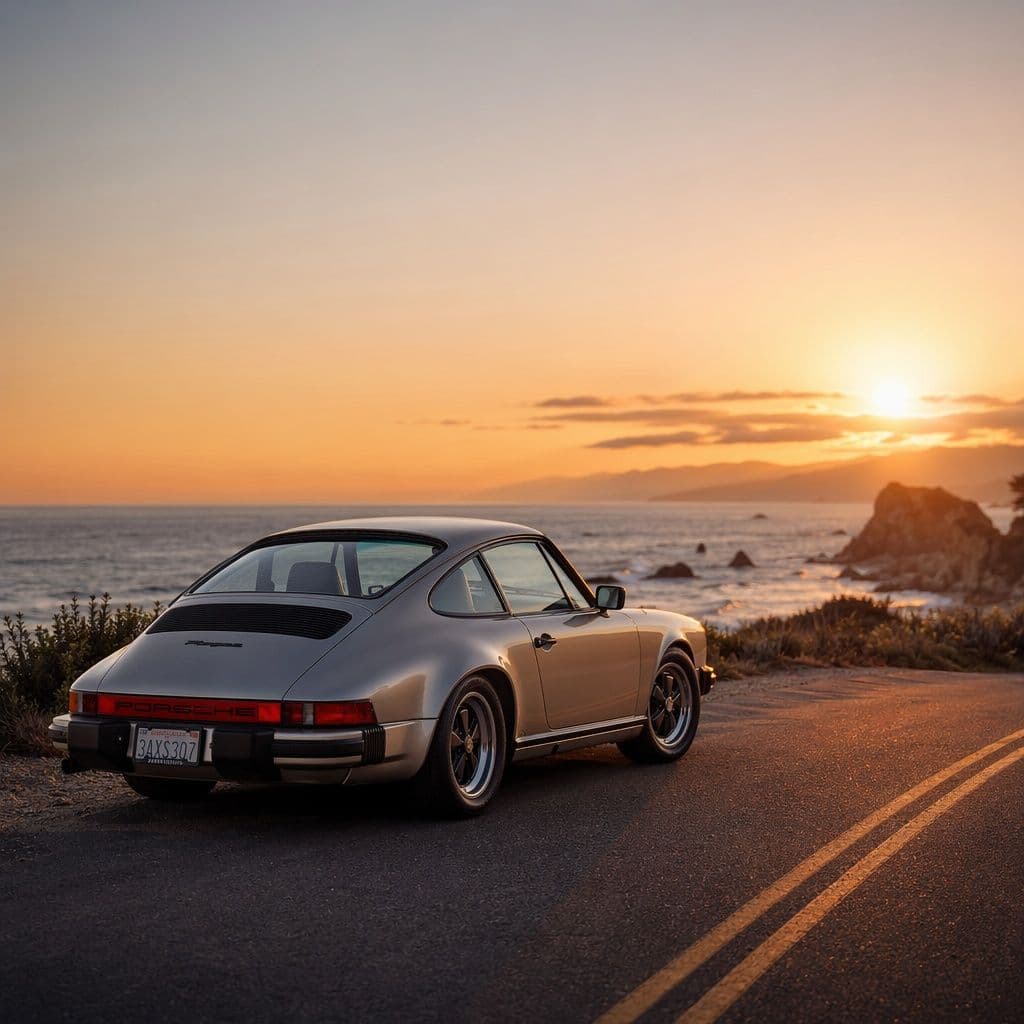
The 911 shares the same engineering principles as the Volkswagen Beetle, another instantly recognizable car, particularly with its rear-engine layout. After Ferdinand Porsche Sr. designed the Volkswagen Beetle, his son, Ferry Porsche (founder of Porsche AG and driving force behind Porsche’s first car, the 356), guided Porsche’s early growth. Ferry’s son, Ferdinand Alexander “Butzi” Porsche, then designed the original 911, unveiled in 1963. The 911’s sloping roofline, rounded headlights, rear-engine layout, and flat-six engine have remained since its production began in 1964. With a recipe of tradition and innovation, both early air-cooled and modern water-cooled 911s boast exceptional performance, reliability, and handling.
In comparison, many cars chasing trend-focused style cycles can undermine their ability to age gracefully by looking dated after decades. The 911’s purposeful consistency, a testament to Porsche’s design philosophy, is a magnet for collectors, as it ensures the model’s enduring value.
Our Porsche 911 investment guide will further explore why this model has become a durable asset class among collectors and discuss how this desirability translates into measurable value.
The Porsche 911 Formula for Collectible Value
Knowing the formula for Porsche 911 appreciation starts with understanding the factors that drive their values. Aside from the design consistency mentioned earlier, rarity, originality, specs, provenance, cultural importance, condition, and documentation are key criteria.
Rarity
Porsche 911 values vary dramatically. A 1977 911 S in “excellent” condition can sell for $35,000, while a 1995-1998 GT2 can fetch over $1.2 million. Porsche made thousands of (1974-1977) 911 S units, but only 194 examples of its GT2, showing how, like any other classic, rarity is a fundamental consideration.
Originality
Originality differs from rarity in that it conveys how closely the car matches its factory configuration. Each of these sports cars has a unique origin story, and succeeding in the classic Porsche 911 market involves knowing it.
Resources like a Production Specification and a Classic Technical Certificate show a 911’s original production card specifications, including optional equipment, exterior and interior colors, engine and transmission types, production completion date, and sticker price (when available). You’d access this information using a 911’s vehicle identification number (VIN).
Some collectors go a step further by ordering a Porsche Classic Technical Certificate, which involves an inspection by a Porsche technical expert at a qualified dealership.
Specs
You probably figured that specs impact a Porsche 911’s value, but you may be wondering which specs are most significant. The answer to this question primarily relates to particular 911 generations.
We’ll explore the most important 911 generations among collectors and their attributes in more detail. Notable specs can include side script, rear spoilers like the ducktail, air-cooled versus water-cooled engines, and color.
Provenance
Provenance is a car’s documented history, and it can matter as much as trim level. Besides a Porsche Production Certificate, collectors may validate a 911’s value through an original bill of sale, ownership history, service records, and racing documentation.
Cultural Importance
Story and emotional appeal through cultural importance play a central role in defining a 911’s value. The 911 is at the forefront of Porsche’s rich motorsport history, which is a testament to its performance greatness. Homologated race models like the 911 Carrera RS 2.7, as well as celebrity ownership, can all drive a surge in demand.
Condition
The concours scale, rated from 1-6 (with 1 being the highest), is the general framework for rating a classic car’s condition. These ratings are concours (1), excellent (2), good (3), fair (4), project (5), parts (6).
Mileage is a key secondary indicator, and you’ll want to consider certain benchmarks like 50,000. Classic 911s with under 50,000 miles are most desired, especially early 1960s and 1970s examples. Still, well-maintained 911s with over 100,000 miles can still qualify as value collectibles, as they’ve passed early expensive break-in periods. A Porsche 911 with something like 150,000 miles may have also undergone costly engine-out services, which improve drivability but detract from originality.
Air-Cooled Porsche Investments and the Most Important 911 Generations
Most serious 911 collecting is rooted in the air-cooled engine era, spanning 1964-1998. The air-cooled era started with the original 911 F-Series (1964-1973) and G-Series (1974-1989), 964 (1989-1994), and 993 (1995-1998). As of 2021, over 70% of the 410,348 air-cooled 911s were still on the road.
Air-cooled 911s are broadly defined as:
- Short wheelbase/long hood cars (1964-1968)
- Long wheelbase/long hood cars (1969-1973)
- Impact bumper/mid-year 2.7 or G-Series cars (1974-1977)
- G-Series SC 3.0L: 1978-1983
- G-Series Carrera 3.2: 1984-1989
- 964: 1990-1994
- 993: 1995-1998
Of all 911 air-cooled Porsche investments, G-Series, 964, and 993 models are the most relevant because they’re the most refined eras.
G-Series Porsche 911
Many consider the G-Series to be one of the most robust, character-driven, and functional 911 eras. Porsche implemented safety, mechanical, and comfort improvements without altering the 911’s core DNA, and its range of models and personalities draws collectors worldwide. Models like the Carrera 3.2 balance vintage vibes with daily drivability, and the 911 SC rides the analog wave while remaining reliable.
964 Porsche 911
Porsche 964 appreciation is tied to this generation being produced in lower numbers than other 911s, and its status as the last of the 911s with original body styling (ex, bug-eye headlights) is a collector value that can’t be recreated post-996. In addition to being available in Targa, Cabriolet, Coupe, or Speedster configurations, you could buy it in all-wheel drive or rear-wheel drive. Its analog nature also makes it relatively easy to modify, and it was the first 911 with a true, fully automatic Tiptronic transmission as a factory option.
993 Porsche 911
Porsche 993 value primarily revolves around this generation being the last air-cooled 911. Despite maintaining the 911’s ethos, the 993 only shared 20% of its components with the previous 964. Design choices, such as its aluminum construction, made it light, and its wider track improved high-speed stability. Think of it as a supercar you could use every day.
Recent Porsche 911 Value Trends
A few relatively recent periods have made a noticeable impact on Porsche 911 values, starting with the 2008-2009 global financial crisis. While high-end Porsche 911 values bottomed out by late 2009, they held up better than many sports cars, with a recovery by 2011. Middle market or non-extreme 911 value recoveries followed in 2012. Like any classic, a 911’s value depends on the model and the purchase price.
In 2016, Porsche’s newsroom wrote: “Since the financial crisis of 2008, when historically low interest rates had shrewd investors turning to alternative investments, these cars have increased rapidly in value. An annual appreciation of 15 percent has been all but guaranteed, and some models have even exceeded this return several times over. The apparently unlimited demand for classic cars continued into 2015.”
During 2020-2022, there was a surge in air-cooled 911s, early water-cooled 911s (996‑era GT3, 997 GT3/RS variants), and high-spec modern 911s with anniversary status.
Which Porsche 911 Will Go Up in Value?
The best Porsche 911s to invest in are those exemplifying irreproducibility. This irreproducibility can mean certain 911s existing because of regulatory loopholes, transitional engineering, or internal Porsche decisions that wouldn’t be approved today. Naturally aspirated engines, manual gearboxes, hydraulic steering, lightweight construction, and homologation intent are tangible reflections of this desirability.
Porsche 959
Beyond its limited production, the 959 is desired among collectors for its advanced twin-turbocharging, lightweight construction, and pioneering all-wheel-drive system, features that would later influence Porsche engineering developments.
Representing peak 1980s automotive innovation, the 959 originated as a Group B rally homologation model, and its twin-turbocharged 2.8-liter flat-six engine delivered a stunning 444 horsepower (450 PS). However, Porsche balanced this power with reliability, and it was one of the first production cars to feature an electronically controlled all-wheel-drive system.
Porsche 911 GT2 RS 997
With only 500 models ever produced and a “widowmaker” nickname, the 911 GT2 RS 997 represents the pinnacle of 911 analog driving before the PDK transmission became standard for GT vehicles. The 911 GT2 RS 997 is best characterized as extreme, unforgiving, and unfiltered with an exclusively rear-wheel drive configuration, massive turbo power, and low electronic intervention, complemented by aggressive weight reduction. Scarcity and boundary-pushing design frequently turn heads in the classic car market, and the 911 GT2 RS 997 is no exception.
Porsche 911 Carrera RS 3.0
The RS 3.0 was a low-volume homologation model that served as the road-legal foundation for Porsche’s RSR program. Porsche primarily released this 911 in 1974, and its arrival coincided with rising emissions standards, oil crises, and shifting buyer tastes. Total production was limited to around 109 units. Enthusiasts also crave its wide bodywork, massive brakes, reinforced chassis, and 3.0-liter engine derived from Porsche’s motorsport program.
Smart 911 Investing: Budget, Strategy, and Long‑Term Value
Irreproducibility spans every Porsche era, and the best 911s to invest in depend on your budget, risk tolerance, and financial goals. While many investors might prioritize appreciation, others might emphasize preservation or long-term enjoyment.
If you’re looking to invest in a 911 on a budget, look towards 996s like the 996 Turbo, or consider a 991.1 Carrera S (the 991-generation’s first phase). Models such as the 993, 996 GT3, and 997.2 GTS occupy the mid-tier slot, and blue-chip icons include the 959, RS 2.7, RS 3.0, 993 GT2, or 997 GT2 RS.
The Porsche 911 collector market has experienced both stability and stark appreciation in recent years. Early long-hood 911 models from the 1960s and 1970s with the purest original 911 body easily fetch six-figure sums in mint condition, and newer water-cooled 911s, such as the 996 and 997, are attractive to younger buyers with their performance and affordability. The expanding demographic of Porsche collectors, rising interest in undervalued models like the 996 Turbo, and electric conversions of classic Porsches make now the ideal time to invest in 911s. Balancing irreproducible blue‑chip icons with undervalued transitional models can generate compounding returns over decades.
%2520(1)-1.jpeg&w=3840&q=75&dpl=dpl_DQiTLd73E64SRjzekpXdHoPoCuaA)
Cody Carlson — Automotive Journalist
Automotive writer covering collector cars, performance vehicles, and the intersection of automotive culture and investing. All articles →