What Makes a Car Collectible? Key Factors Explained
Why Collectible Cars Matter
Educational content for accredited investors. Not an offer to sell securities. See full disclosures.
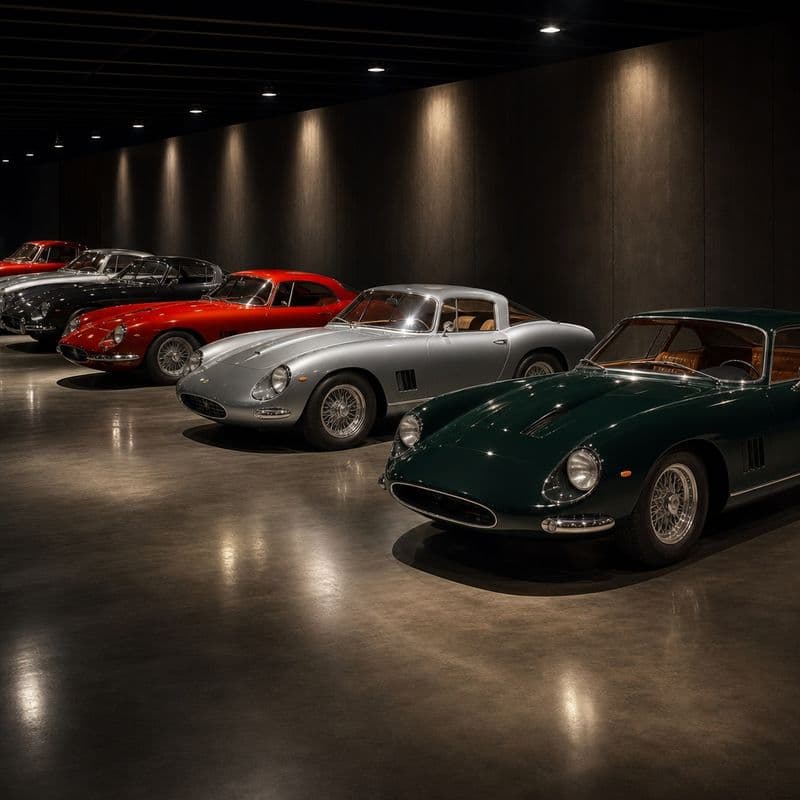
Classic cars are tangible, high-growth assets offering investors portfolio diversification, a hedge against inflation, and passion. The shift toward classic cars’ increasing presence in alternative investment portfolios, which displayed staggering acceleration from 2005-2013, was preceded by people storing them in garages or barns, entering them in contests, or restoring them for fun. At a high level, what makes a car collectible comes down to a combination of rarity, demand, condition, and story.
The Coutts Objects of Desire Index (primarily tracking European and UK auction data for high-end classic cars and other passion assets) showed that classic cars had risen 257% from 2005 to 2013. This index, drawn from 15 asset classes, grew 77% overall during this period, and classics outperformed traditional go-to investments like city and leisure properties.
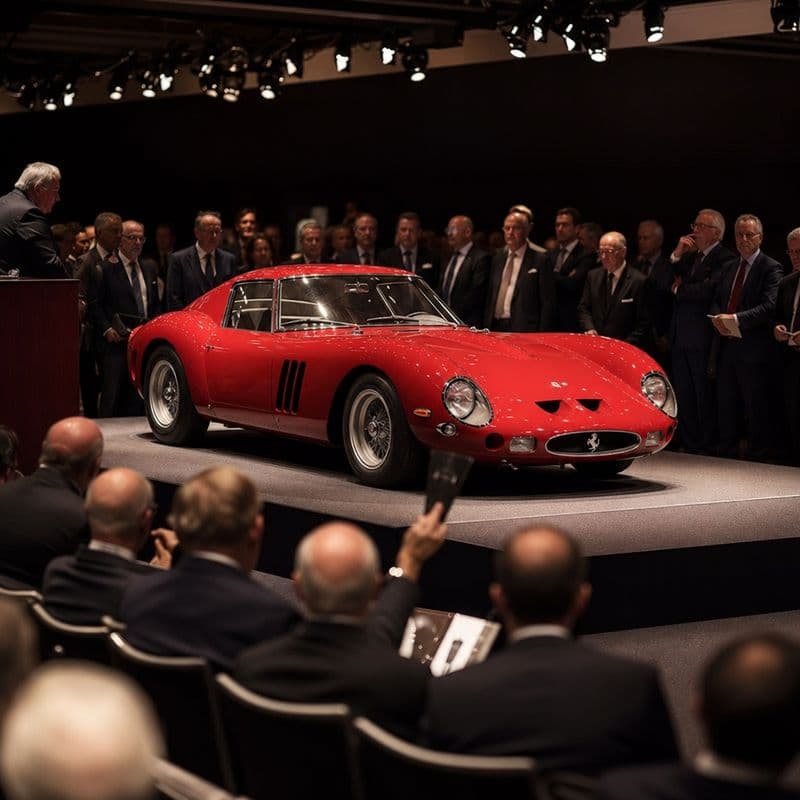
Annual car show events such as the Pebble Beach Concours d’Elegance and auctions like Mecum Kissimmee have further elevated the public’s awareness and appreciation for collectible cars as investments. In 2022, collector car auctions in North America alone totaled $3.48 billion, according to Hagerty.
Several core criteria define collectibility in more detail, starting with rarity and production numbers.
What Makes a Car Collectible: Key Collectible Car Criteria Like Rarity, Demand, Story
The factors that determine car collectibility start with production rarity versus survivor rarity. BMW produced just under 18,000 E30 M3s, which is far more than the 500 LaFerraris Ferrari manufactured. However, the number of original, drivable BMW E30 M3s has been greatly reduced due to decades of racing, modifications, or units that outright disappeared. Subsequently, the E30 M3 represents survivor rarity, whereas the LaFerrari’s value is primarily rooted in production rarity. Story and rare features can define a car as collectible. The LaFerrari was Ferrari’s first-ever hybrid supercar, complemented by 9200 RPM and 950 horsepower intensity.
When preserved in pristine condition, even higher-production models can gain value as collectibles. A prime example is the Mk4 Supra. Toyota produced about 45,000 Mk4 Supra examples, and a 1995 Supra Turbo sold in 2021 for $201,000. Upon its release, the 1995 Supra Turbo had an MSRP of $48,700 ($85,221 in 2021 dollars).
Still, rarity alone doesn’t instantly qualify a car as collectible. The Bricklin Vehicle Corporation only made about 2,850 SV-1 units from 1974 to 1976. While the SV-1 had some elements collectors wanted, such as gullwing doors, their acrylic-bonded fiberglass construction was prone to cracking, and its safety latches repeatedly failed.
Provenance and Authenticity
How to identify collectible cars starts with provenance and authenticity, and provenance is determined by ownership history, historical documentation, and factory records. Replicas, restamps, or undocumented registrations pose significant risks to provenance.
In 2023, a buyer purchased a 1961 Mercedes-Benz 300SL in Switzerland for $1.74 million. When registering his purchase in Germany, authorities claimed that a fake car was created using the chassis number from a yellow SL that already existed in Germany, which hadn’t been to market in decades and was assumed lost. Law enforcement labels this situation as a “restamp.” Despite high-end, pristine replicas not being especially common, some insurance providers have groups investigating questionable and suspicious claims, and certain attorneys specialize in cases involving collector cars.
Undocumented restorations, which may lack receipts or other proof and hide potential quality issues, are a common pitfall, but restoration fraud can take other forms. In 2023, Clark P. Rittersbach, of Concours Classic Motor Cars in Macedon, New York, was charged with wire fraud for deceiving his clients out of $1.15 million. Rittersbach claimed to restore their vintage cars, but either neglected to complete the work or did not do it at all. He was convicted after pleading guilty. Due diligence in classic car investing mirrors the reasonable care required in art investing by verifying certification and history.
Condition, Restoration Quality, and Originality
It’s vital to note the difference between unrestored survivor cars and concours‑restored vehicles when investing in classics.
Unrestored survivor cars tend to hold more value than their concours-restored counterparts for uncompromised originality. In comparison, values for concours‑restored vehicles are rooted in their pristine aesthetics. However, concours values can increase with quality restoration using documented OEM (original equipment manufacturer) parts. In this case, quality restoration means executing the job to match factory specs. Classic automobiles are often admired for their craftsmanship, design, and historical context, so using modern aftermarket parts undermines this ethos. An ideal concours‑restored car might have a matching-numbers engine or factory-correct interior trim.
What truly distinguishes collectible cars is the industry standard condition scale. Sources differ slightly in their scaling, but the industry standard for evaluating classic car quality ranges from 1 to 6. The lower the number, the better the condition. Ratings can also incur “+” or “-” for added accuracy.
#1: Concours
It’s uncommon to see a concours classic car outside of an automotive event, and in the collector world, they’re considered even better than “like-new.”
#2: Excellent
Excellent is associated with the phrase “like new” in classic car collecting. Many excellent-quality classics are fully restored and only have minor flaws, which may be purely technical.
#3: Good
The majority of enthusiasts owning classics have a #3-condition vehicle, according to Hagerty. Unlike a #1 or #2 collectible, a #3 tends to be driven regularly, leading to natural wear and tear, like paint chips or interior aging.
#4: Fair
Fair classics display more significant defects, and mechanically, it’s likely that everything isn’t sound.
#5: Project
That half-finished 1960s Mustang sitting in your neighbor’s garage would qualify as a project car. Whether a model requires mechanical attention to get moving or notable paint/body work, these vehicles need a significant refresh to move into #3 or #2 territory.
#6: Parts
Parts cars are vehicles that you’re better off stripping for parts because they’re in too rough a shape to financially warrant a restoration.
Timing and Market Cycles
Cars that will appreciate in value ebb and flow with generational interest and macroeconomic health. Sometimes there’s rhyme and reason behind the numbers; other times, there isn’t.
In the first half of 2022, Gen X accounted for the largest share of U.S. collector car owners at 35%, surpassing boomers at 34%, Hagerty reports. In 2025, boomers and pre-boomers began trending upwards, and today, boomers are once again the largest group of collector car buyers at 35% as of February 2026.
While the explanation for boomers’ rebound in the U.S. collector market isn’t entirely clear, certain patterns, such as the 30-year nostalgia cycle, in which models from one’s youth gain new demand, can contribute to growth among younger buyers. Global wealth trends are another driving force in shaping the automotive investment niche. The most likely reason boomers represent the majority of U.S. classic car collectors is that they’re both the wealthiest buyers and the most accurate at the moment. Purchasers also spend more when interest rates are lower, and scarce auction exposure can increase a vehicle’s value.
The Role of Brand and Motorsport Heritage
Brand lineage and motorsport heritage are the classic car market’s bread and butter, in that they influence the perception of what automobiles are worth investing in as “art.”
Consumers widely believe that manufacturers whose vehicle lines are associated with luxury and prestige tend to excel in many areas, like ride and handling. Secondly, some brands’ extensive racing history, such as Ferrari, Porsche, and Aston Martin, adds allure and investment potential, as these accomplishments are a testament to the companies’ success. Long-standing, historical brands like Ferrari, Porsche, and Aston Martin qualify as “blue-chip” investments, whereas Toyota’s Supra or Acura’s NSX are emerging collectibles.
Identifying Future Classic Cars
Having collectible car criteria for predicting future appreciation gives your portfolio protection against speculation without fundamentals. These criteria can include limited production runs, innovative features, or cultural impacts like movie appearances.
Manual V12-engined cars, such as Lamborghini’s Murciélago, are a prime example of vehicles that have sparked an early collector movement amid mass electrification and enduring demand for analog performance models. The 2010 Dodge Viper represents a unique collector opportunity with this being the final time the car was offered without electronic stability control, providing a pure analog experience.
Mustangs have maintained consistent appeal, and any Mustang with “Shelby” in its name is ripe to become a future classic. The 2015 and 2016 Ford Mustang Shelby GT350’s mark the now-retired model’s debut, which included a new flat-plane crank V8 concept with 526 hp and 429 lb-ft of torque. Some collectors may overlook pickups, but certain models, like the first-gen F-150 SVT Raptor, Ford’s first true high-performance off-road truck with a factory warranty, are coveted among enthusiasts.
When evaluating the next collectible cars, it’s best to balance emotional appeal with data.
The Blend of Passion and Discipline
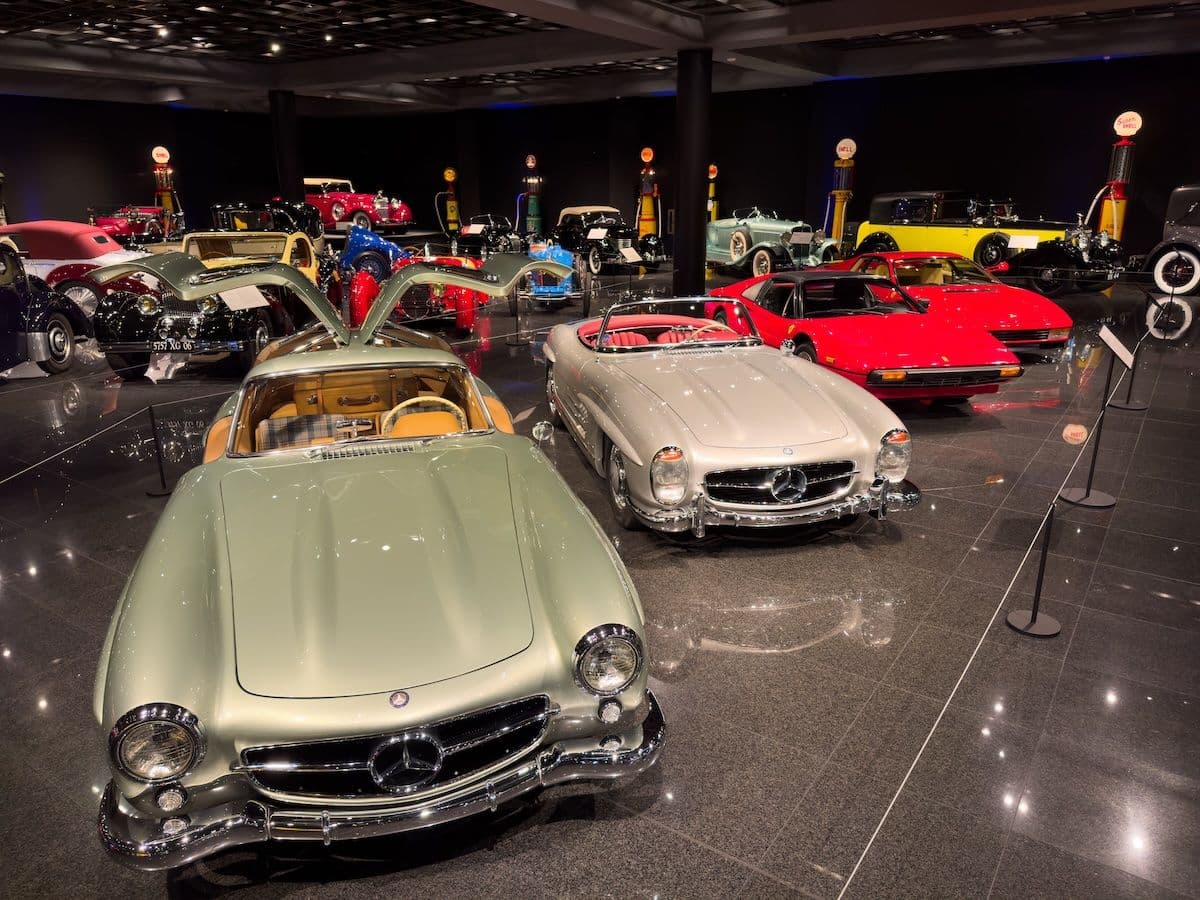
Successful car investing bridges the gap between emotional enthusiasm and rational analysis. Vehicle purchases of any kind are rarely purely rational, and the emotion you feel witnessing a car in a showroom is similar to viewing a showcased concours you’re considering investing in. Understanding what makes a car collectible, such as scaled condition ratings, rarity, demand, and story, helps fill in the blanks of this emotional appeal, so use this classic car buying guide for direction.
Like any investment, classic car portfolios benefit from diversification, proper care, and expert input, but when you check each box, you get a gorgeous, tangible asset that’s financially sound.
%2520(1)-1.jpeg&w=3840&q=75&dpl=dpl_DQiTLd73E64SRjzekpXdHoPoCuaA)
Cody Carlson — Automotive Journalist
Automotive writer covering collector cars, performance vehicles, and the intersection of automotive culture and investing. All articles →