

The Anatomy of a $1M Car: Inside the Most Expensive Collector Cars
Key Takeaways:
- $1 million+ cars compound multiple driving factors
- Story sells emotion, while provenance proves value
- A concours or highly original survivor can both command a million-plus
- Auctions provide transparent comps that rewrite markets, but they’re best used as interpretations
- A 4-digit production model can still hit $1 million.
What Makes a Car Worth Millions?
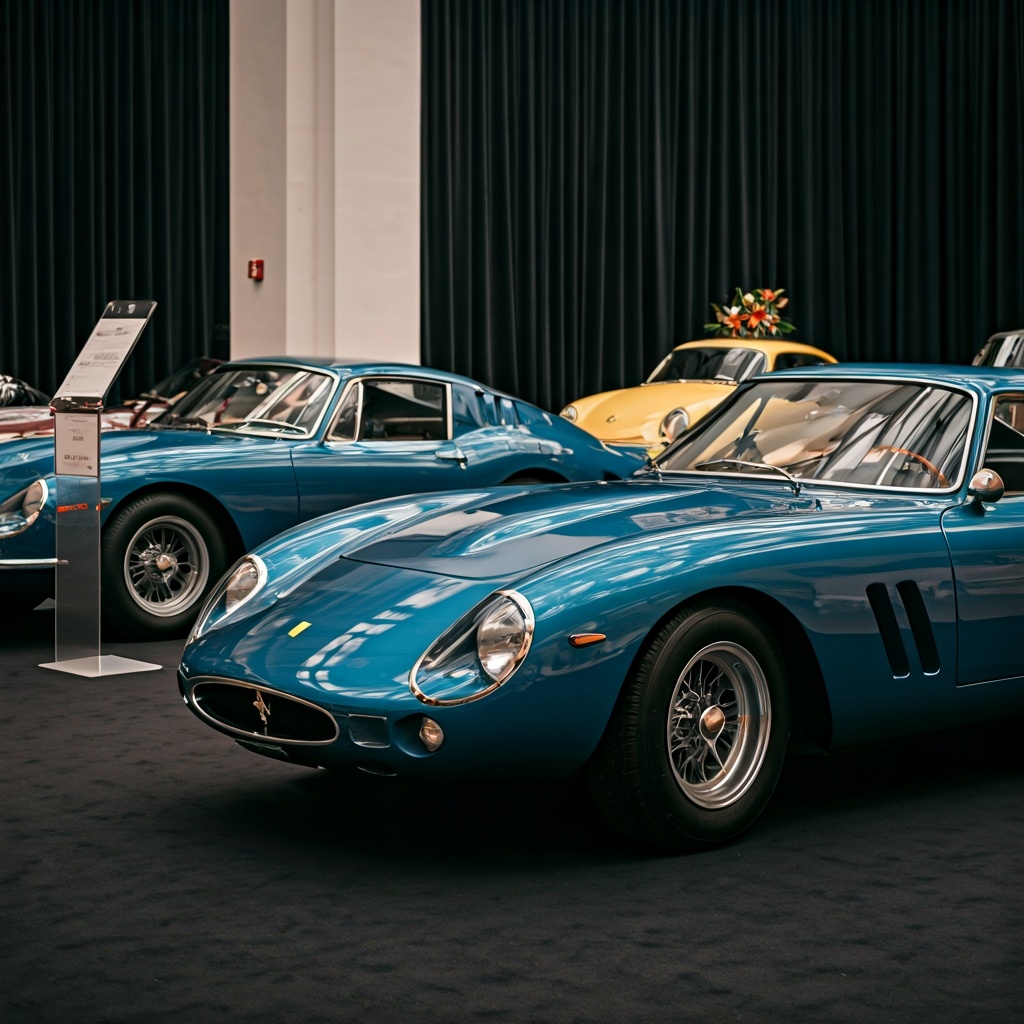
January’s Mecum Kissimmee auction in Florida saw a Ferrari 250 GTO hammer for $35 million, with the buyer’s premium increasing its price to $38.5 million. While any of the 36 Ferrari 250 GTOs ever built is highly valued, the most expensive collector cars aren’t just rare. Understanding what makes a car worth millions also involves knowing its cultural resonance and historical significance.
This $38.5 million Ferrari 250 GTO was built for British racing team owner John Coombs, and Ferrari’s factory painted the car Bianco white, the only 250 GTO to leave Maranello in that color.
A car reaches seven figures when multiple value drivers align simultaneously. In other words, these independent factors compound rather than operate in isolation, creating a stark contrast between simply being “expensive” and “investment-grade.”
Many of these same factors also determine broader collector desirability. We recently explored what actually makes a car collectible, including how rarity, provenance, and condition influence long-term value.
The Foundation of the Most Expensive Classic Cars: Rarity, Story, and Provenance
Production and survivor rarity, compelling narratives, and provenance are fundamental collector car price drivers, creating $1 million+ values. When these classic car valuation factors converge, you get instances like a highly original 1966 Ford GT40 MkII Factory Lightweight selling for $12.375 million at Mecum Kissimmee this year.
Rarity (Production vs. Survivor)
It’s essential to separate production and survivor rarity when considering assets like the most valuable vintage cars, where classic car valuation factors such as low production numbers often outshine mileage or minor wear. Production rarity indicates how many units an automaker produced of a given model. In contrast, survivor rarity refers to a collectible vehicle that has remained unaltered since its manufacture.
Regarding million dollar classic cars, production rarity ranges from a few dozen examples on the low end to possibly three digits, but rarely crosses into four-digit territory.
A four-digit exception is the Mercedes-Benz 300 SL Gullwing, which is frequently listed among the most expensive collector cars, with an average value at or near $1 million, despite 1,400 units being produced between 1954 and 1957. However, only 29 Mercedes-Benz 300 SL Gullwing examples featured all-aluminum bodies instead of the model’s standard steel. In 2022, a 1955 Mercedes-Benz 300 SL Alloy Gullwing sold for $6.8 million at the RM Sotheby’s Scottsdale auction. Despite being steel-bodied, another 1955 300 SL sold for $1.7 million at the same auction, a price supported by its original engine.
Story and Provenance
Stories that can propel a car’s value to seven or eight figures include, but aren’t limited to, a movie or TV connection, race history, or something personal. In January 2020, the original 1968 Ford Mustang GT driven by Steve McQueen in Bullitt sold for $3.74 million at the Mecum Kissimmee auction after being owned by the same family for over four decades.
Five years later, a special one-car auction run by RM Sotheby’s and held at the Mercedes-Benz Museum in Stuttgart, Germany, saw a 1954 Mercedes-Benz W 196 R race car driven by Juan Manuel Fangio and Stirling Moss sell for €51,155,000 (about $59.89 million).
Provenance is related to story, but different in that it refers to a car’s documented ownership history and traceability. For example, comedian Jerry Seinfeld turned down a $25 million auction bid for his prized Porsche 917K, which Steve McQueen also owned, after it didn’t meet reserve at Mecum Kissimmee 2025. Seinfeld later sold the Porsche privately for an undisclosed amount.
Condition, Originality, and Documentation
Considering condition, originality, and documentation means transitioning from “what the car is” to “what shape it’s in,” which is complemented by supporting records. While a pristinely restored car can easily command $1 million, so can an untouched survivor with more flaws. This tug-of-war between collector car price drivers is where money decisions occur.
Concours Condition, Preserved Survivors, and Top-Quality Restorations
The industry-standard scale for rating classic car condition ranges from 1 to 6, with 1 indicating the highest score, or “concours” condition. You’ll be hard-pressed to find a concours outside of a high-tier judged show. In comparison, the second-highest rating, “excellent,” means you’re more likely to see that car on the road. Every detail in concours is factory correct, including, but not limited to, paint finish, panel alignment, and inspection stamps. Simply put, concours more so indicates “correct” than flashy.
Preserved survivors are the epitome of survivors in that they’ve maintained their original, unfinished, and unaltered state. Historical authenticity that can’t be replicated, such as original factory materials, is a driving force behind why a preserved survivor might become a $1 million collectible, whereas a certain concours may fall short of this sum. Since criteria such as matching numbers and OEM (original equipment manufacturer) parts can significantly affect value, full documentation is vital.
A prime example of a $1 million preserved survivor is a 1970 Dodge Challenger RT/SE that sold for at least $1.0725 million (with a 10% buyer’s premium, elevating the final figure over $1 million) in 2023. This Challenger secured the high bid in under 10 minutes with its original 426-cubic-inch V8, dual four-barrel carburetors, and a four-speed manual transmission that would appear at night on Detroit’s Woodward Avenue, a strip famous for impromptu and illegal drag races. Detroit police officer Godfrey Qualls raced this Challenger and rarely lost before disappearing for weeks or months, earning the car its “Black Ghost” nickname.
You then have top-quality restorations that prioritize returning a car to a near-perfect state, with less emphasis on factory originality. In addition to regularly appearing at show events, a top-quality restoration is often driven comfortably. In January 2026, a 1963 Chevrolet Corvette Z06 “Big Tank” Coupe, featuring a painstaking frame-off (complete teardown to bare chassis) restoration, sold for $1.1 million at Barrett-Jackson Scottsdale.
Why Rare Car Auction Prices Matter So Much
Auctions don’t just reflect value — they establish, amplify, and sometimes deflate it. One head-turning sale reported from firms like RM Sotheby’s or Gooding & Company can reset market expectations. Unlike private sales, auctions for the most valuable vintage cars provide public, transparent comparable figures in which the hammer price, combined with the buyer’s premium, serves as a trusted benchmark. Parties like insurers, dealers, and collectors use this high-profile sales data to establish a classic car’s “last known value.”
Dealers and private sellers may use rare car auction prices to adjust their sticker prices, and more owners of the model can enter the market to capitalize on demand since bidding wars can occur. Bidding wars are one price amplifier that can push a car to or past $1 million, but time pressures are another.
While all auctions are time-sensitive in that they’re scheduled with an outlined format, final lots of the day or headline cars can create a pressure cooker, amplifying bidding. Poor timing, like a weak slot, can also lead to underperformance. It’s worth evaluating these factors since a single sale can rewrite a model’s market playbook. If an owner lists a car they’re auctioning with a $1 million reserve and that reserve isn’t met, they’ll often use a high bid as a guide price for relisting.
Ultimately, not every auction result indicates “true” value. The best automotive investors interpret overperformance and underperformance rather than living and dying by a hammer price.
How to Evaluate the Most Expensive Collector Cars Today
Let’s shift from theory to decision-making. It’s essential to remember that a single factor rarely creates a $1 million car. Instead, you’re looking for an intersection of value drivers.
These value drivers include:
- Rarity (production vs. surviving or original)
- Provenance (verifiable ownership and traceability)
- Condition (restoration quality vs. preserved state)
- Demand (current buyer intensity + liquidity)
When considering liquidity, you’re evaluating the market’s depth of qualified buyers and how easily a car can transact near its expected value without steep price concessions.
Even if exceptionally strong in one key area, some cars miss a $1 million status if they’re:
- Rare but poorly documented
- Highly original, but have little to no demand
- Perfectly restored, but contain a weak story or pedigree
- Strong provenance, but weak market timing
A $1 million car valuation isn’t static, as liquidity and buyer composition shift constantly, and one model can behave differently across cycles. While auctions are the primary real-time validation layer, their results should be used as interpretations.
We explored this dynamic further in our breakdown of classic cars vs the S&P 500, including how auction results, liquidity, and collector demand influence long-term returns.
Your decision framework for evaluating a $1 million car today should include asking “does this car combine scarcity, authenticity, and desirability?” and “is there evidence of sustained demand beyond a single sale?”
This formula shows how value is constructed. The next generation of $1 million cars will stem from low-volume production runs, vehicles with motorsport or other cultural significance, preserved originality, and well-documented provenance.
Related Update