Top 5 Future Classic Ferraris: Best Modern Ferraris to Invest In
Key Takeaways:
- The best modern Ferraris to invest in have transition-era significance, production rarity, and emotional collector psychology
- Many of the most desired modern Ferraris balance the benefits of analog design and driver-assistive tech
- Modern Ferraris with a naturally aspirated front-engine V12 signal the end of an era in the face of increasing turbocharging and electrification.
Why Certain Modern Ferraris Are Better Positioned For Future Collectibility
Identifying future classic Ferraris requires understanding what gives certain models potential upside. Ferraris with the highest investment potential often occupy unique positions in collector psychology through traits like nostalgia, halo status, or ultra-limited production. Prime future classic candidates also tend to align with generational demand shifts, such as a preference for certain production decades or drivability factors. This criterion applies to established and future classics alike, but predicting collectible modern Ferraris requires more nuance.
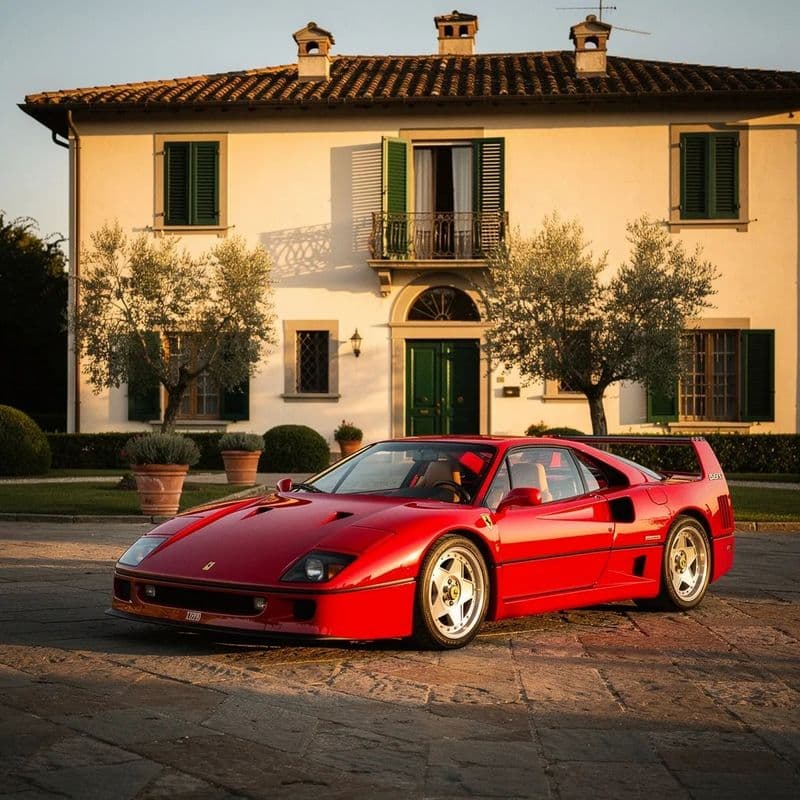
For example, many of today’s classic Ferrari collectors increasingly prefer the raw, unfiltered analog driving experience offered by models like the F40. In contrast, modern Ferraris that could become classics contrast with this analog ethos in that they’re increasingly computer-driven as they transition toward electrification and shrink their naturally aspirated engine options. Factors like computer-driven assists and electrification don’t necessarily mean certain models won’t become classics, but they place more emphasis on other conditions including, but not limited to, production rarity and transition-era significance.
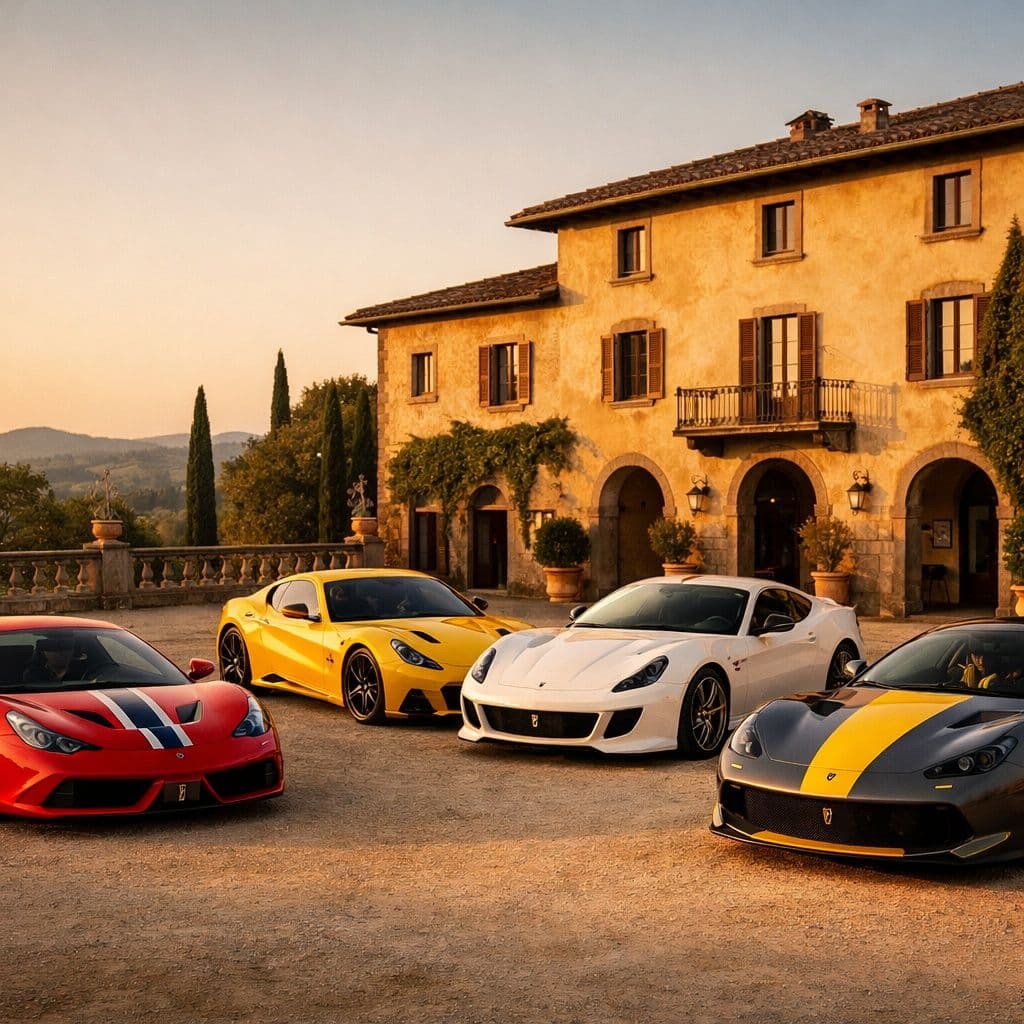
Our guide on likely Ferrari future classics consists of models from the 2010s onward, each with enough usability and technology that one could enter the market now before broader recognition matures.
Ferrari 458 Speciale (2013-2015)
The 458 Speciale’s naturally aspirated significance, lightweight/driver-focused setup, and relationship to the brand’s special-series lineage makes it a top future classic Ferrari contender. These unique traits are heightened by the model’s raw sound and analog-like feel, embodying traditional Ferrari philosophy.
Ferrari’s 458 Speciale is the automaker’s last naturally aspirated mid-engine supercar, and its lightweight engineering results in a weight-power ratio of 2.13 kg/cv, helping produce a 0-60 mph time of 2.9 seconds. This lightweight engineering stems from choices like reducing glass thickness and using thinner panels and carbon-fiber components compared to the standard 458. Driver-centric design is at the heart of many Ferraris, and the 458 Speciale took this standard to a new level with a steering response of 0.060 seconds and a lateral acceleration of 1.33 g, the highest-ever for one of the brand’s road cars at the time.
Low-production appeal helps optimize the 458 Speciale’s chances of becoming a future classic. While Ferrari didn’t publish exact production numbers, the 458 Speciale is said to have made around 3,000 examples, a comparatively small run within the 458’s overall run of around 20,000 units.
Why The Last Naturally Aspirated Ferrari V8 Matters
Ferrari milestones, such as the F40 being the last model personally approved by the company’s founder, Enzo, have played a central role in defining the upside of particular models. It’s more likely than not that the 458 Speciale’s status as the automaker’s last naturally aspirated mid-engine supercar will serve as a key milestone helping it pay off as a modern Ferrari investment. While some new Ferraris still offer naturally aspirated engines, the manufacturer’s lineup is primarily turbocharged V8s and hybridized V6/V8 powertrains. Enthusiasts praise naturally aspirated engines for their generally sharper throttle response, simplicity facilitated by fewer moving parts, increased durability, and higher-pitched engine note.
Ferrari F12tdf (2015-2017)
The F12tdf’s positioning as a front-engine V12 Ferrari is significant, as this configuration is often prized as a future emotional flagship collectible. A front-engine V12 is a pure embodiment of the automaker’s Grand Tourer formula, combining robust power with a timeless design that has been seen at Ferrari for over 75 years. The Italian manufacturer’s very first car, the 1947 Ferrari 125 S, featured a Colombo V12 with a front-engined layout. Ferrari’s 1962 GTO would be the first car to truly evolve this front-engine V12 formula into a marker of pinnacle performance.
While the F12tdf’s front-engine V12 formula embodies core Ferrari values, its limited-production design takes this configuration a step further, similar to the 1962 GTO. This approach includes Ferrari implementing race-inspired mechanical tappets and variable-geometry intake trumpets, as used on Formula 1 cars, to optimize volumetric efficiency at high revs. As a result, you have a reflection of Ferrari’s racing heritage and increased torque output over the standard F12. A Ferrari F12tdf features a torque output of 705 Nm (520 ft-lb) compared to the standard version’s 690 Nm (509 ft-lb) of torque. This increased power is complemented by rear-wheel steering, striking an ideal balance between extreme performance and usability through superior balance and predictable handling. Besides the F12tdf being a limited variant, with Ferrari making only 799 examples, naturally aspirated V12 setups are becoming increasingly rare in the company’s modern lineup as emissions regulations tighten.
Ferrari 599 GTO (2010-2012)
Ferrari’s 599 GTO is a limited-edition, track-focused variant of the 599 GTB, the third-ever model to wear the brand’s “GTO” badge, following the 250 GTO and the 288 GTO. The 599 GTO is based on the 599XX track car and boasts 661 horsepower, with over 200 lbs of weight reduction compared to the standard 599. Lighter exhaust components, quicker shifts, and an upgraded aerodynamics package helped produce a 3.1-second 0-60 mph time via a naturally aspirated front-mid-engine V12. It was the fastest road-going car Ferrari had ever produced at the time of its release.
Despite having race-derived technology such as the Virtual Race Engineer (VRE) system, which provides a driver with real-time performance feedback, collectors are more likely to appreciate this model’s blend of analog and digital features. In other words, the 599 GTO bridges analog and tech-heavy Ferraris, making it rarer beyond its ultra-limited 599-unit production. Besides the naturally aspirated V12, other raw additions include its single-clutch F1 gearbox that’s clunkier at lower speeds, more direct steering, and minimalist interior. The 599 GTO’s tech also isn’t as hindering as some modern Ferraris. For example, its e-diff and F1-Trac let you push rear tires hard without excess drama.
Ferrari 812 Competizione (2022-2024)
Like the F12tdf, the Ferrari 812 Competizione represents one of the most extreme versions of the automaker’s naturally aspirated V12 special-series cars. The 812 Competizione arrived as hybrids became more prevalent within Ferrari’s lineup. In 2022, hybrid engine models represented 22% of Ferrari’s total shipments. Just one year later, 44% of Ferrari sales were hybrid, followed by 51% in 2024. End-of-an-era is a key value-driver in Ferrari collecting, and the 812 Competizione’s consistent use of a naturally aspirated front-mounted V12 in the face of increasing electrification makes it coveted among enthusiasts beyond its low production of 1,598 examples.
Upgrades over the standard 812 Superfast include 19 additional horsepower (819 total horsepower) at a greater rev limit, higher torque at 717 Nm (529 lb-ft) versus 691Nm (510 lb-ft), and numerous design and aerodynamic enhancements. These enhancements include, but aren’t limited to, improved handling responsiveness, a weight that’s 300 lbs lighter than the 812 Superfast, vortex generators, and an aluminum rear windshield replacement, which contributes 176 lbs of additional downforce. The 812 Competizione is ultimately one of the highest points in Ferrari’s front-engine V12 development.
Ferrari SF90 Stradale (2020-2024)
The SF90 Stradale is a contrarian choice as a modern Ferrari that could become a future classic compared to some of our list’s more analog-focused selections. However, this contrary nature is part of why the model deserves consideration. Similar to how “end-of-era” positioning can increase a Ferrari’s value, first-ever’s are also worth noting. The SF90 Stradale is Ferrari’s first series-production plug-in hybrid car. This technological milestone helps balance the fact that it’s not an ultra-limited model like the 599 GTO. While the SF90 Stradale shows that historically important Ferraris are not always the most analog, collectors should consider some risks associated with the model. Emotional buying can inflate prices during market peaks, and the SF90 Stradale is less emotional than naturally aspirated Ferraris, given the increasing presence of hybrid options in the brand’s lineup. The SF90 Stradale’s battery health, complex electronics, and higher average repair costs also create longevity concerns.
Future Ferrari Classics FAQ
What Makes a Future Classic Ferrari?
Key factors dictating a modern Ferrari’s chances of becoming a future classic include limited production numbers, historical significance like technological milestones or end-of-era powertrains, and emotional desirability. Modern Ferrari collectors often seek models with race-derived designs that don’t overdo assistive technology, like the 599 GTO.
Can a Modern Ferrari Investment Pay Off?
While most cars depreciate, modern Ferraris differ in that their exclusivity and collector culture foster potential upside. Still, maintenance and ownership costs matter, such as those potentially associated with new hybrid technology in the SF90 Stradale. Additionally, the best modern Ferraris to invest in tend to be limited or historically significant.
Why Are Naturally Aspirated Ferraris Becoming More Collectible?
Naturally aspirated examples are turning into collectible modern Ferraris because they’re beginning to mark the end of an era, with turbocharging and electrification becoming the new norm. Their raw sound and driving feel also foster emotional desirability through strong automotive nostalgia.
%2520(1)-1.jpeg&w=3840&q=75&dpl=dpl_DQiTLd73E64SRjzekpXdHoPoCuaA)
Cody Carlson — Automotive Journalist
Automotive writer covering collector cars, performance vehicles, and the intersection of automotive culture and investing. All articles →