The Last Manual Ferrari: Why Drivers Are Paying a Premium to Row Their Own Gears
Key Takeaways:
- The first-generation California, not the 599 GTB Fiorano, was the last Ferrari with a manual transmission
- Only two to three manual Californias were built, compared with roughly 30 manual 599 GTB Fioranos
- Despite the California’s greater rarity, the manual 599 GTB Fiorano remains the collector market’s most recognized modern manual Ferrari
- Ferrari’s shift toward F1 paddle-shift gearboxes during the 2000s created the brand’s gated scarcity today
- The strong appreciation of rare gated Ferraris helps explain why manual supercars are a good investment.
The Last Ferrari With a Manual Transmission Is Not The Car Most Collectors Think It Is
Many enthusiasts can understand the idea of Ferrari’s final manual carrying collector appeal, but fewer recognize which model technically holds this title. While two Ferrari models are often conflated as being the true final manual, the car earning this classification is actually less significant from a market perspective.
The first-generation California is the last Ferrari to offer a manual option. Ferrari produced its first-generation California during 2008 through 2014 model years, but only two to three units were built and sold with a 6-speed gated manual transmission. The final first-generation California model with a manual was a 2012 example. Despite the extreme rarity of first-generation manual Californias, the Ferrari 599 GTB Fiorano (2007 to 2012) is generally more coveted among collectors with its combination of a V12 engine and a six-speed manual.
While also rare, with just 30 manual units produced, the 599 GTB’s V12 use overshadows the first-generation California manuals’ pure scarcity, representing the brand’s most expressive and historical engine philosophy. The V12 traces all the way back to Ferrari’s first vehicle, the 125 S, released for the 1947 model year. In contrast, the first-generation Ferrari California was powered by a 4.3-liter naturally aspirated V8. Still, one key similarity between the two models is that they both command collector attention today, even though they were largely ignored when new, as Ferrari was actively pushing buyers toward automated gearboxes.
How Ferrari Engineered The Manual Transmission Out Of Its Lineup
Ferrari’s transition toward early paddle-shifted automated manual gearboxes, officially labeled F1 transmissions because F1 cars’ paddle-shift technology inspired their design, began with the 1997 release of the 355 F1. The Ferrari 360 Modena (1999 to 2005) and F430 (2004 to 2009) would follow with their own F1 transmission options before the 599 GTB Fiorano and California’s arrival, giving buyers time to acclimate to the new configuration. Ferrari pushed its shift from traditional gated manuals to F1 transmissions to improve shift times and consistency and to more closely align with its racing heritage, framing the transition as an evolution rather than a compromise. In comparison, many view Ferrari’s increasing electrification as a compromise, suiting tightening emissions regulations and shifting market demographics.
Ferrari take rates, or the percentage of buyers who choose a specific model, trim, or feature, experienced notable changes throughout the 2000s. During the 360 era, which was relatively early in Ferrari’s automated push, the F1 transmission outsold the model’s manual by around 2:1 globally. Buyers’ embrace of paddle-shift transmissions also had a practical appeal outside of faster lap times and F1 emulation. Paddle shifters offered an increasingly smooth and comfortable experience, especially in traffic, where manuals were most prone to stalling. However, this split in shopping preferences affected future collector-car values and helps explain why manual Ferraris are so expensive today. In other words, many of today's classics possess characteristics new buyers once dismissed.
The Last Manual Ferraris Were Already Disappearing Before The Market Cared
It’s not necessarily that enthusiasts weren’t aware that Ferrari was gradually phasing out manual transmissions starting in the late 1990s and accelerating into the early 2000s. Instead, buyers weren’t attaching additional value to the transmission, viewing it as just another option rather than a cornerstone of collecting. Ferrari 360, F430, 599, and California buyers had little reason to believe a manual transmission would become a major collector attribute, given that the spec had been available for so long. Ferrari also didn’t confirm it was dropping manual transmission until the 2016 Paris Motor Show, years after the last factory model featured the configuration in 2012.
It’s especially difficult to view a feature as historically significant in real time when it’s perceived as outdated in new vehicles. Still, an outdated feature in a new model doesn’t necessarily cement its future desirability among enthusiasts. These features typically draw future interest when they align with collectors’ shared desire for analog, distraction-free driving.
Despite take rates clearly favoring paddle-shift vs. manual Ferrari transmissions by the early 2000s, six-speed gated scarcity was quietly forming, which helps answer the question of “are manual supercars a good investment?” Scarcity loudly forming, such as heavily-hyped limited-editions, is more susceptible to initial price bubbles.
The Last Manual V12 Ferrari (Why The 599 GTB Fiorano Became The Modern Poster Child For Ferrari’s Gated Era)
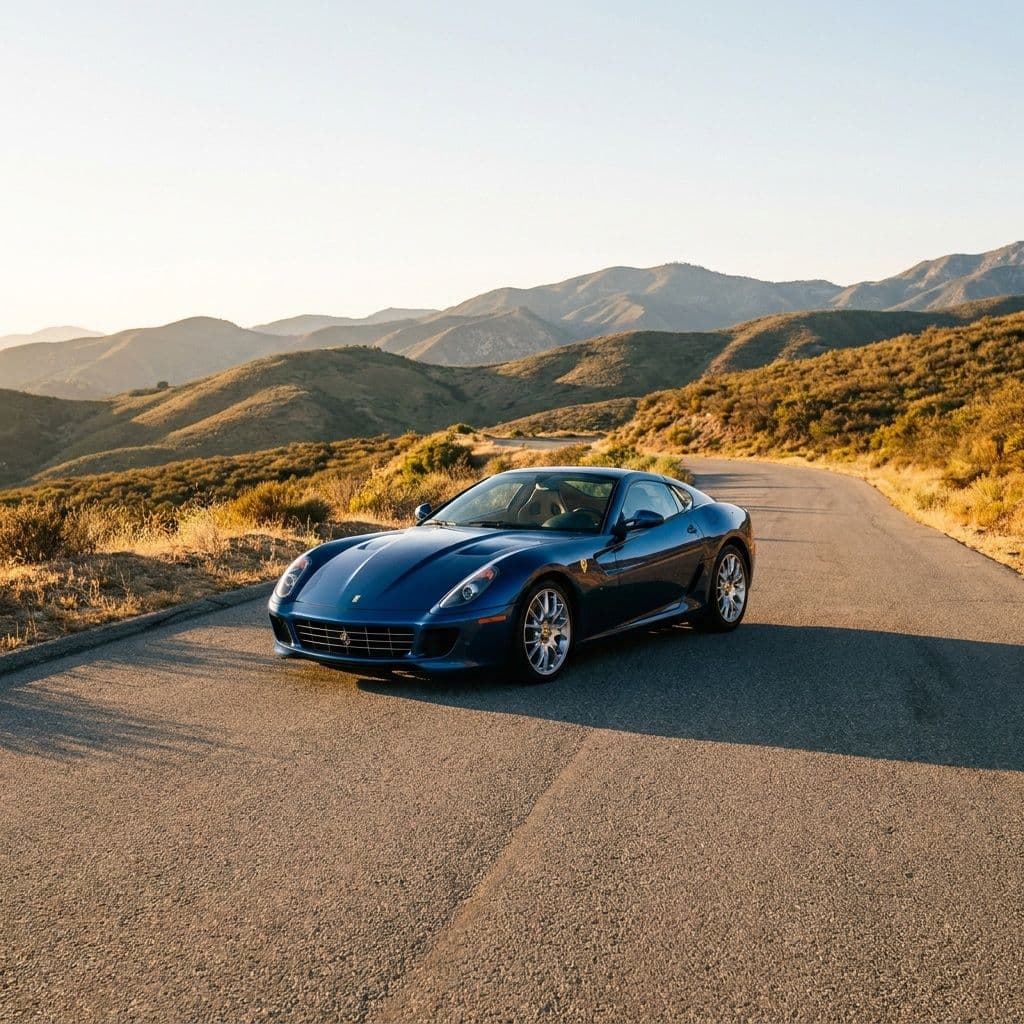
The 599 GTB Fiorano became the reference point as the last modern manual Ferrari in discourse, across media and auctions, because visibility determines which models become symbols. First, the 599 is easier to categorize in more ways than one. Like most Ferrari GTs, the 599 features the brand’s famous front-engine V12 layout. The 599’s status as a flagship model also garners more attention than a mass-produced vehicle (within the context of Ferrari), such as the California. Ultimately, a halo model is more likely to land the cover of MotorTrend than its less expensive counterpart with greater production. Ferrari’s higher California production also made it easier to overlook the minuscule number of manual versions, given that the manual take rate was near zero. Ferrari produced 3,500 599 GTB Fiorano units between, compared with 10,000 first-generation California units.
Auction values show there’s plenty of sustained interest for 599 GTB manuals, which is no surprise given their rarity. This model’s base price was $264,034 (in 2007 dollars) for its 2007 model year. In 2023, RM Sotheby’s auctioned a manual 599 GTB Fiorano with under 4,000 miles for $830,000. Another 599 GTB Fiorano was sold for $786,000 through RM Sotheby’s in 2024. These high-value auctions solidify the 599 GTB Fiorano as a key reference point for modern manual transmission Ferrari pricing, whereas the first-gen California manual’s small data footprint makes it harder to anchor as a symbol.
The Ferrari California Manual May Be The Bigger Sleeper Story
While the 599 GTB Fiorano may represent the last modern manual Ferrari to many enthusiasts, a first-gen manual California will quickly draw interest given its extreme scarcity. Similar to choosing a paddle-shift vs. a manual Ferrari 599 GTB Fiorano, selecting a six-speed first-generation California didn’t significantly alter base price, with starting costs for a 2010 model landing at around $200,000 (in 2010 dollars). In 2016, a 2010 Ferrari California manual sold for $435,000 at the Artcurial auction in Paris. Manual Ferrari values for first-generation Californias are bound to increase, given that there are so few opportunities to attain one.
FAQ: The Last Manual Ferrari Transmission
Why Are Manual Ferraris So Expensive? (What Collectors Are Really Paying For When They Buy A Manual Gearbox Ferrari)
Gated manual Ferrari transmissions’ appeal among collectors extends beyond scarcity. A Ferrari’s gated manual transmission clicks with mechanical precision, creating a tactile sensation not found in paddle shifters. Similar to the role of V12s in Ferrari’s history, manual transmissions also evoke nostalgia from a time before supercars became heavily computerized.
Still, even analog enthusiasts value the comfort and convenience of more recent examples, and that’s why “last of an era” manual modern Ferraris like the 599 GTB Fiorano and the first-generation California are particularly coveted. Collectors are receiving that direct driving experience with some of the rougher edges smoothened in areas like suspension and cabin ergonomics. Increasing electrification may further propel collector manual Ferrari values, since hybrid and fully electric transmissions operate differently.
What Was The Last Gated Manual Ferrari Ever Built?
The last manual Ferrari ever built was the first-generation California, with the final example leaving Maranello in 2012. In contrast, the Ferrari 599 GTB Fiorano was the last manual V12 Ferrari. Ferrari produced only two or three (sources vary) manual first-generation Californias and 30 manual 599 GTB Fioranos.
Why Is The Ferrari 599 GTB Manual More Famous Than The Gated California?
The Ferrari 599 is more famous than the manual Californias, despite the latter model being scarcer, due to its halo status and use of a front-engine V12, reflecting the brand’s heritage. Front-engine V12s helped define Ferrari’s image, as its first model, the 125 S, featured this configuration.
Are The Market’s Manual Gearbox Ferraris Still Increasing In Value?
Ferrari manual cars are skyrocketing in value as enthusiasts seek to reconnect with analog classics, offering fewer interruptions and more engagement than today’s computerized supercars with increasingly electrified powertrains. As new automatic supercars persist and the number of high-quality manual examples grows slimmer, this value gap is bound to tip further toward manuals.
%2520(1)-1.jpeg&w=3840&q=75&dpl=dpl_DQiTLd73E64SRjzekpXdHoPoCuaA)
Cody Carlson — Automotive Journalist
Automotive writer covering collector cars, performance vehicles, and the intersection of automotive culture and investing. All articles →