10 Cars That Were Laughed at When New — and Now Sell for Six Figures
Key Takeaways:
- Many cars nobody wanted that are now worth a fortune were initially dismissed for traits that collectors celebrate today
- Racing pedigree remains one of the strongest drivers of long-term value among unexpected collector cars
- Criticism alone doesn't form the best underrated investment cars. Instead, future classics that already appreciated possess factors like rarity, engineering significance, cultural impact, and enthusiast appeal.
Why the Market Loves Underrated Collector Cars
Initial reception and long-term value of vehicles can diverge because new-car shoppers generally make different purchasing judgments than investors do. When a new vehicle is released, consumers weigh price against aspects such as daily comfort and modern styling. In comparison, factors primarily bolstering a car’s collectibility include provenance, authenticity, condition, originality, and cultural nostalgia. Subsequently, the market often miscalculates future collectibles, as highlighted by the 10 vehicles below, many of which became the fastest appreciating cars of their era.
Purists Said the 914 Wasn’t a Real Porsche, but It’s Far From One of the Automaker’s Forgotten Sports Cars
Many enthusiasts initially wrote off the 914, released during 1969-1976 model years, as an unauthentic Porsche, given that the vehicle was marketed as a Volkswagen-Porsche in Europe. Today, the 914 is frequently cited among the strongest classic car investments from the air-cooled Porsche world, especially rarer six-cylinder variants.
A 1970 Porsche 914/6 GT (one of only 16 customer cars for 1970) consigned to Gooding & Company’s 2020 Scottsdale auction finalized at a $995,000 sale price. Another 1970 Porsche 914/6 GT sold for $655,000 through RM Sotheby’s in 2021. However, more common 4-cylinder versions can still fetch a hefty sum. In 2025, Bring a Trailer auctioned a 1974 Porsche 914/4 for $95,000. Beyond a 914/6’s true Porsche flat-six engine, collectors also value the 914’s unique shape and nimble handling, courtesy of its light weight and mid-engine balance.
Everybody Mocked the Wedge Until It Became a Dream Car: Lamborghini Countach
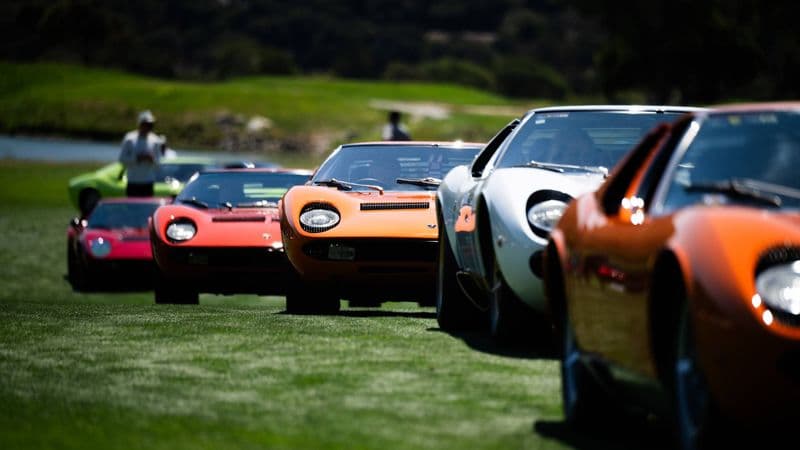
The Lamborghini Countach remains one of the most famous cars that went up in value after receiving criticism when new. As one of the world’s first wedge cars, its polarizing shape divided audiences, but its unique aesthetics also challenged practicality. Visibility out of the first-generation Countach’s (1974-1978) rear window was virtually nonexistent, which led to engineers integrating a periscope rearview mirror, resulting in its Periscopio nickname. The cabin was also criticized as having poor ventilation and cramped dimensions. Still, the Countach was nicknamed “the inconvenient ideal,” as its lack of practicality (which wasn’t especially refined throughout its lifespan compared to its performance and driveability), didn’t overshadow its quintessential poster car status.
This cultural image fueled nostalgia supporting the model’s appreciation through decades. In 2014, the “impractical” 1975 Lamborghini Countach LP400 Periscopio sold for $1.21 million at Bonhams, making it the first Countach to surpass the $1 million threshold. That same year, a 1974 Lamborghini Countach LP400 Periscopio sold for $1.87 million through Gooding & Company.
The Supercar That Arrived Before Buyers Were Ready: BMW M1
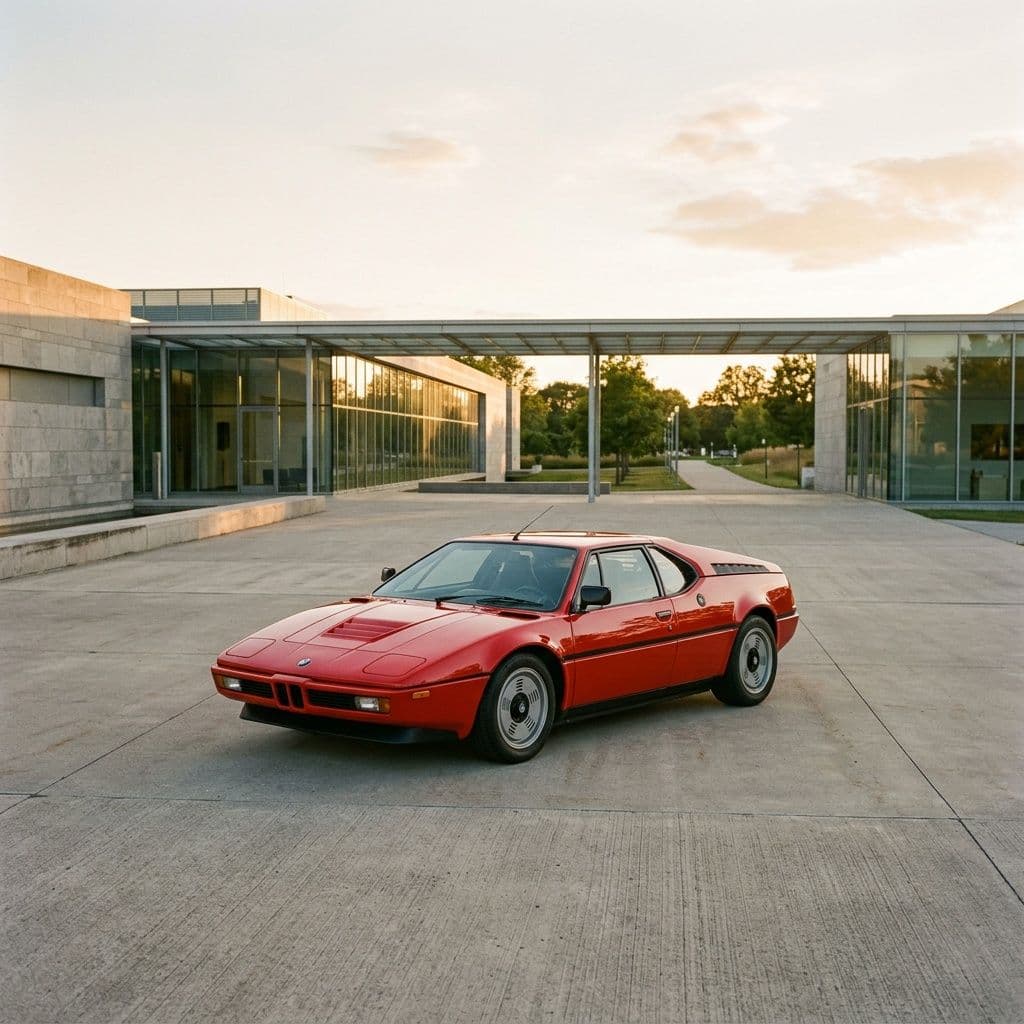
The BMW M1 suffered a long run of bad luck before gaining collector momentum. In the late 1970s, BMW contracted Lamborghini to engineer, develop, and manufacture the M1. The German automaker would eventually terminate its contract with Lamborghini in 1978 over Lamborghini’s financial issues. This car’s lead developer, Jochen Neerpasch, would move on from the project after multiparty manufacturing processes dragged on and Group-5 racing, the series the car was designed for, dissolved. Neerpasch later tried to homologate the M1 for worldwide Group 4 and Group 5 racing through his Procar one-make series, an effort that failed due to negative driver feedback.
As the market shifted toward sedans and vans and BMW encountered financial issues, the brand ended its M1 project. Still, interest in exotics increased in the late 1980s, and the M1 captured collectors’ attention with its blend of performance, comfort, and status as one of BMW’s most rare cars (fewer than 450 road-going versions made). A race-prepped M1 Procar auctioned for $1.6 million at Broad Arrow in 2025, with the highest-valued factory-standard example selling for $651,000 in 2022 via Bring a Trailer.
The Supercar That Was Too Easy to Live With: Acura NSX
The first-generation Acura NSX (1991-2005) presents an irony among cars that became six-figure collectibles: its initial criticism, that it lacked the exotic character of European rivals, has led to it becoming a valuable market item in recent years. Honda designed the NSX to strike a balance between power and reliability, with many examples eventually exceeding 100,000 miles without notable issues. While buyers weren’t getting the brand prestige of companies like Ferrari, they received a more spacious cockpit and gentler road manners.
Along with being a more ergonomic classic, the first-generation NSX embodies true analog driving, a characteristic in heavy demand among today’s collectors, with cars becoming more computerized. Elements like unassisted steering provided a delicate, direct driving feel, complementing its legendary balance for confident handling. Classic.com data shows that five first-generation NSXs have been auctioned for over $300,000, with 17 examples selling for over $200,000.
The Plymouth Superbird Was Among Cars Nobody Wanted
Plymouth Superbirds, produced for a single model year in 1970, were initially hard to sell with their radical design carrying over from NASCAR homologation requirements, specifically the aerodynamic nose cones and large rear wing. At the time, these aesthetics were considered by most muscle car shoppers as too extreme for simply cruising around town. Many examples of the nearly 2,000 manufactured road units sat unsold on dealership lots as late as 1972. However, this model’s production scarcity and racing heritage ties have led to its rise in the classic market.
In 2022, Barrett-Jackson auctioned a 1970 Plymouth Hemi Superbird for a whopping $1.65 million. Only 135 of the total Superbirds produced featured a 426 Hemi, but non-Hemi examples can still command a premium, as evidenced by a unit that sold for $550,000 at Barrett-Jackson in 2023.
Ferrari’s Dino 246 GT Was Among Cars Laughed at When New -— Enthusiasts Have Done a 180
The Dino's rise highlights how unconventional Ferraris can become successful classic car investments. Many purists initially avoided the Dino like the plague due to its lack of Ferrari badging. While Ferrari produced the Dino 246 GT from 1969 to 1974, the brand’s founder, Enzo, didn’t equip the model with Ferrari’s badge over concerns it would dilute Ferrari’s prestige, given the vehicle’s status as an accessible, mid-engine sports car without a V12.
The Dino 246 GT eventually fell into the category of cars that became valuable among collectors with its ideal blend of size, performance, and appealing Pininfarina styling. Handling is widely considered the car’s best performance attribute, courtesy of a midship engine, race-track suspension, and direct, unassisted rack-and-pinion steering. One of the most expensive 246 Dino GT sale to date saw a highly original example go for $665,000 at Gooding & Company’s auction in Monterey, with other examples consistently selling for over $100,000.
The Sedan That Sparked Public Outrage: Lotus Carlton
Lotus produced only 950 units of its Carlton super saloon that was exclusively sold in Europe, and the model’s steep £48,000 sticker price (not adjusted for inflation) meant it struggled commercially. The Lotus Carlton’s launch was also surrounded by media controversy, as politicians labeled it as too fast for the road. However, this controversy has primarily driven its resurgence as a collector automobile.
This car’s GM inline-6 engine was bored and stroked to 3.6 liters and received a redesigned cylinder head and twin Garrett turbochargers. The result was 377 horsepower, up from the engine’s original 204 horsepower. Period and real-world tests would reveal that the Carlton outperformed Ferrari’s Testarossa in acceleration and top speed. The average Lotus Carlton sales price approaches six figures, and three examples have sold in the U.K. for over $100,000 since 2023, according to Classic.com data.
The “Batmobile” BMW Many Thought Went Too Far: BMW 3.0 CSL
As the Plymouth Superbird and Lamborghini Countach have shown, radical styling can prompt early criticism of a car, and the BMW 3.0 CSL (1972 to 1975 model years) isn’t an exception. For weight savings and aerodynamic efficiency, BMW added polarizing elements to the 3.0 CSL, such as a deep air dam with twin functional circular holes rather than a front bumper, two rubber fins stretching almost the full length of the hood, and two chunky spoilers on the roof edge and the trunk. These wild add-ons spurred the model’s “Batmobile” nickname. BMW also removed soundproofing and insulation while replacing the hood-opening mechanism with a lighter pin release.
While the 3.0 CSL was a tough sell on showroom floors, it later landed among six-figure cars in the collector market thanks to its homologation roots and racing success, the latter of which included six European Touring Car Championships. A 1975 example (the last of 57 second-series 3.0 CSL Batmobiles built) sold for $602,736 in 2022 through RM Sotheby’s, with the model’s average auction price registering at just over $225,000, per Classic.com records.
The Rally Hero That Once Felt Too Niche: Lancia Delta Integrale Evoluzione
Lancia’s Delta Integrale Evoluzione (1991-1994 model years) was a rally weapon that didn’t make much sense to the average buyer. Between 1987 and 1992, the Delta Integrale became the first car ever to win six consecutive World Rally Championship Manufacturers’ titles. However, when it hit the market, the Delta Integrale Evoluzione’s steep price tag (over $40,000, unadjusted for inflation) didn’t mesh well with its aging hatchback design, tracing back to the original Delta released in 1979. This aging design included a cramped interior and boxy, upright shape, contrasting with more aerodynamic competitors.
Still, collectors increasingly value motorsport pedigree, and its inherent collectibility manifests in other traits, such as precise steering with clear tactile feedback despite power assistance, and reduced turbocharger lag in later examples. Classic.com reports that the first-generation HF Integrale Evo I (1991 to 1993) auctions for an average of $99,675, while the Evo II sells for $130,934 on average.
The Japanese Sports Car Nobody Expected to Become an Automotive Investment: Toyota 2000GT
Skepticism surrounded the release of Toyota’s 2000GT (1967 to 1970 model years), as critics weren’t certain how the vehicle’s goal of being a premium Japanese sports car would be achieved, given that the country didn’t have a true internationally recognized example. Despite boasting flashy styling and impressive performance like a twin-cam engine producing 150 horsepower, its steep price (along with other factors like badge snobbery), more than rivals like Porsche’s 911 and Jaguar’s E-Type, led to it becoming a commercial failure.
Today, attitudes towards Japanese vehicles as collectible cars have transformed thanks to models such as the NSX, Supra, RX-7, and Skyline GT-R. Enthusiasts covet the Toyota 2000GT for its status as Japan’s first true premium sports car, its low production run of 351 units, and its appearance in the 1967 James Bond film You Only Live Twice. One of just 62 2000GTs imported into the U.S. during production sold for $1.15 million at a Gooding & Company auction in 2014. The Toyota 2000GT stands among the most dramatic examples of cars that went up in value over the long term.
FAQ: Cars That Almost Nobody Saw as Future Classics
Learn more about why the sleeper investment cars listed above evolved from punchlines into valuable classics below.
Why do some unpopular vehicles become valuable collectible cars?
Cars can be initially unpopular, but later become some of the most surprising appreciating cars because of how potential buyers view them when they’re released versus how they evolve. For example, shoppers can perceive a new release’s design as polarizing and impractical compared to other market options, while collectors may later see these as rare cars due to low production, cultural significance in areas like racing pedigree, or unique layouts.
Are vehicles that receive criticism today tomorrow’s best-appreciating cars?
Criticism alone isn’t enough to make today’s criticized cars grow into future classics. Factors such as engineering significance, uniqueness, cultural impact, and limited production are the primary drivers of a model’s value trajectory. Most criticized automobiles won’t become investment cars, and cars that were cheap but expensive now generally fall under rapid market appreciation rather than traditional long-term collector value.
What can today's buyers learn from these once-mocked cars worth more today?
Our list of once-mocked classic cars worth more today can teach buyers that many of these models challenged conventional wisdom upon release and shared traits such as polarizing aesthetics, unconventional engineering, and motorsport connections. In other words, their marketing positioning confused many buyers, but slow sales can also contribute to limited production runs, furthering collector appeal and forming future investment cars.
%2520(1)-1.jpeg&w=3840&q=75&dpl=dpl_DQiTLd73E64SRjzekpXdHoPoCuaA)
Cody Carlson — Automotive Journalist
Automotive writer covering collector cars, performance vehicles, and the intersection of automotive culture and investing. All articles →