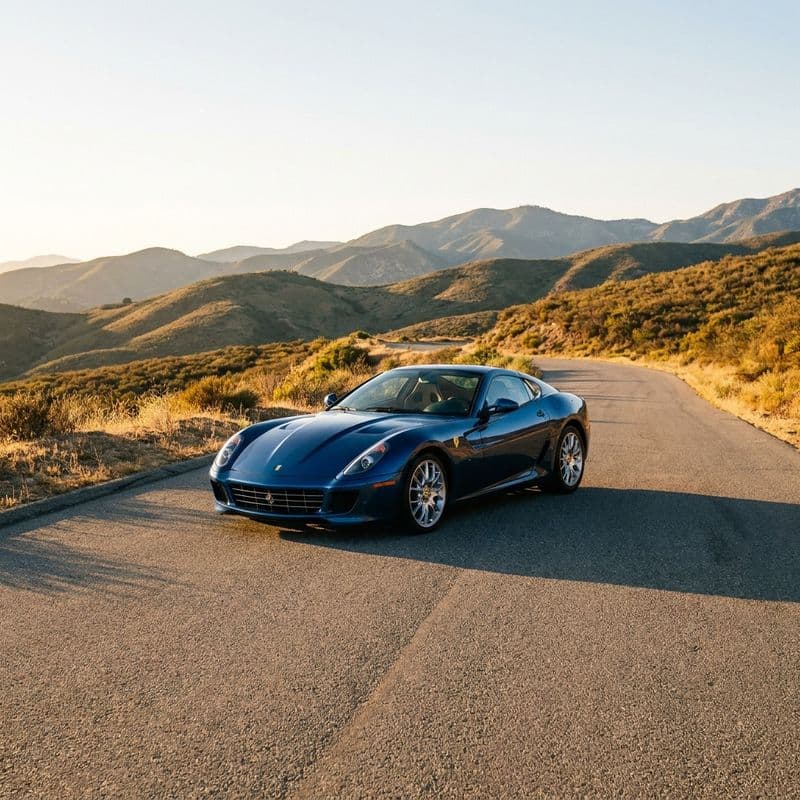
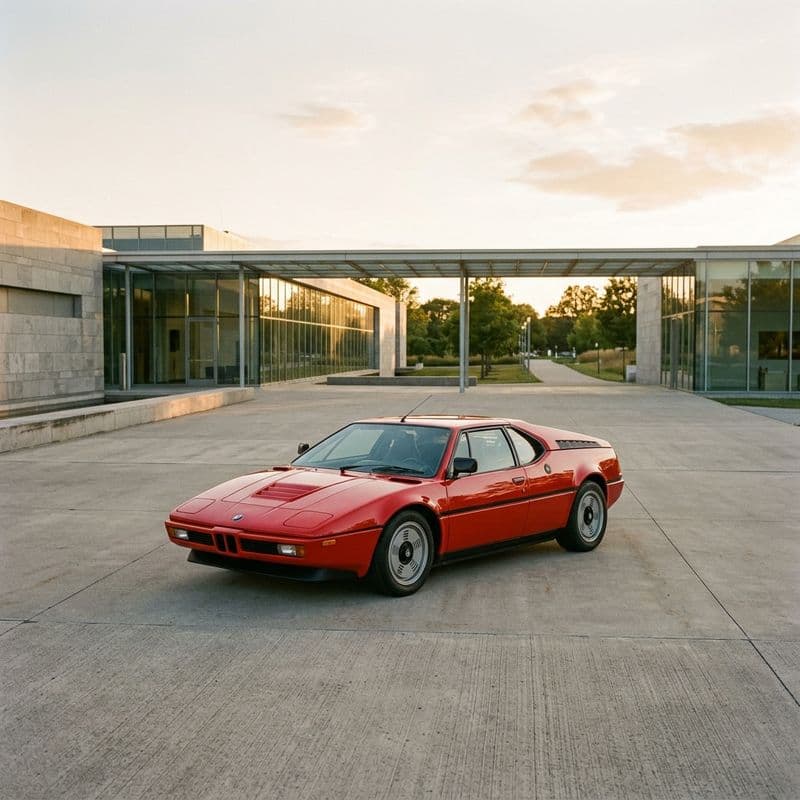
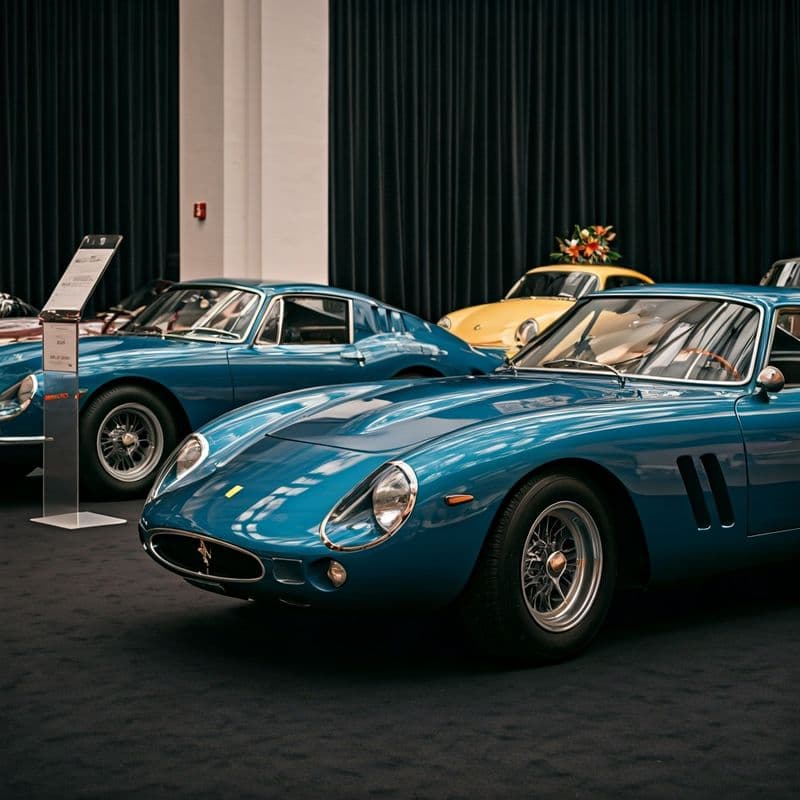
The Poster Cars Are Coming of Age: Modern Classics at Monterey 2026
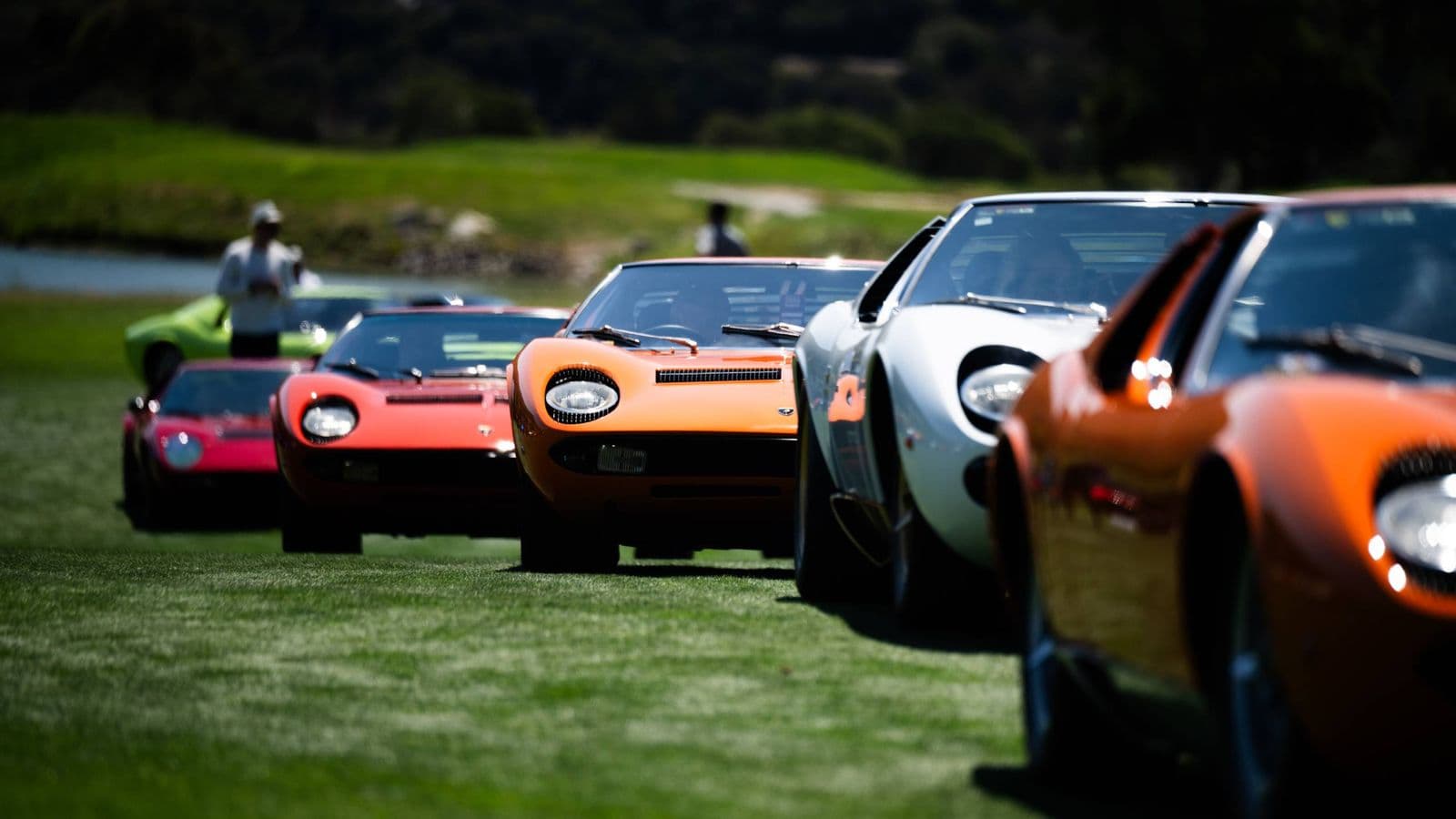
I tend to look at auction weeks a little differently. The headline cars are interesting, but I’m more interested in what the data says about where the market is actually moving.
After Monterey Car Week 2026, our team pulled together every lot from the five major auctions across 2025 and 2026 — 2,275 cars in total.
One segment stood out: cars built between 1985 and 2009.
Modern classics. The cars many of today’s buyers grew up wanting.
And they didn’t just rise with a very strong market. They materially outperformed it.
Modern classics outgrew a record market
Monterey 2026 was the biggest collector-car auction week on record, with around $750M in total sales, compared with $432.7M in 2025.
Even removing the $40M charity Ferrari Luce, the market was still up around 66% year on year.
But cars built between 1985 and 2009 grew significantly faster.
Our lot-level data shows:
- Dollar volume more than doubled, from $91.1M in 2025 to $205.9M in 2026 — an increase of 126%.
- Their share of total Monterey sales increased from 21% to 27%. More than one in every four dollars spent at the auctions went into a modern classic.
- Median sale price increased 33%, from $235k to $313k, while the average sale reached $1.1M.
- Million-dollar sales almost doubled, from 17 cars in 2025 to 33 in 2026.
- Sell-through increased from 73% to 76%.
That last point is important. Prices increased materially while sell-through also improved. That suggests this wasn’t simply sellers asking more money — there was more depth on the demand side as well.
Ferrari F50, Enzo and McLaren F1: the top cars are resetting the market
The results at the top end were even more striking.
A 1996 Ferrari F50 sold for $14.6M at Mecum, setting a new model record. Another F50 sold at RM Sotheby’s during the same week for $12.1M.
Three Ferrari Enzos sold across three different auction houses for a combined $32.2M — an average of $10.7M each.
A Ferrari 288 GTO set a model record at $11.6M, while an ex-Lee Iacocca Ferrari F40 sold for a record $8.4M.
A 1996 McLaren F1 GTR sold for $34.7M, making it the second-highest non-charity result of the entire week.
And it wasn’t limited to $10M+ cars. A Mercedes-AMG SLS Black Series sold for $1.8M — 93% above the model’s previous auction benchmark.
Across the halo Ferraris we track from this period, the median price was $10.7M this year, compared with $4.5M for the equivalent group in 2025.
That is a meaningful move.
Why I think modern classic values are rising
There is a fairly simple generational explanation.
Collectible markets tend to follow the buyers. As people reach the point where they have significant disposable capital, they often come back to the things they wanted when they were younger.
The buyers writing large cheques at Monterey today grew up with cars like the F40, F50, McLaren F1, Carrera GT and Enzo on their bedroom walls, in magazines and later in video games.
We’ve seen the same pattern before with cars like the Mercedes 300 SL and Ferrari 250 GT.
Now that same effect is moving into the cars of the late 1980s, 1990s and 2000s.
But there is another reason I find this segment particularly interesting.
Many of these cars have known production numbers, well-documented specifications, mileage histories and service records. That makes them much easier to compare and analyse than many older collector cars.
Having spent the last decade building vehicle pricing and valuation models, that matters to me.
These are still emotional assets, but increasingly they are assets you can analyse and underwrite with real data.
But not everything is going up
The other important takeaway from Monterey is that this isn’t a broad-based boom where every rare modern car suddenly becomes valuable.
The market is becoming more selective.
A 2005 Porsche Carrera GT was bid to $4M and didn’t sell.
An R34 Nissan Skyline GT-R V-Spec failed to meet its $215k lower estimate.
A McLaren Elva, despite its rarity, sold around the middle of its estimate.
Specification also created enormous differences between cars that, at first glance, look very similar. A Porsche 959 Sport sold for $7.0M, while a 959 Komfort brought $2.9M.
Manual cars continue to command significant premiums over comparable automated versions.
And further down the market, there was clear softness. Total sales below $100k fell by around 18% year on year.
The consistent theme across the week was that exceptional cars performed exceptionally well. Average cars didn’t.
Condition, specification, provenance, production numbers and originality can all be researched and quantified. Two cars of the same model are not necessarily the same asset.
That is also a big part of how we think about cars at Autobahn Alpha. Buying the right model is only the first step. Buying the right example, at the right price, is what matters.
What I took away from Monterey Car Week 2026
Three things stood out to me.
1. Modern classics have become a major part of the collector-car market.
They represented 27% of the biggest Monterey auction week ever, and their dollar volume grew significantly faster than the overall market.
2. More capital is concentrating at the top.
Cars selling above $5M went from $126M of volume in 2025 to $315M in 2026.
The cars showing some of the strongest appreciation are also the ones that are increasingly difficult for an individual collector to own outright.
3. Selection matters more than ever.
The gap between an exceptional example and an average one is getting wider.
In a market like this, simply identifying the right model isn’t enough. Specification, provenance, condition and the price you pay all matter.
None of this means one strong Monterey week guarantees where prices go next.
Collector cars remain illiquid assets. They cost money to store, insure and maintain, and tastes can change.
But if you want to understand where capital moved during Monterey in August 2026, the data is pretty clear.
The poster cars are coming of age.
And the market is starting to treat them accordingly.
Data: Autobahn Alpha analysis of 2,275 lots across RM Sotheby’s, Gooding Christie’s, Broad Arrow, Bonhams and Mecum during Monterey Car Week 2025–2026. Prices include buyer’s premium. Source lot data via Classic.com and cross-checked against Hagerty, Magneto, Motorious and classic-car-auctions.info. Nothing in this article is investment advice or a projection of future returns.

Glenn Harwood — Founder & Managing Partner
Glenn Harwood is the founder of Autobahn Alpha, an investment platform focused on high-quality collector cars as an alternative asset class. With a background in automotive data, pricing, and market dynamics, he brings a disciplined, data-driven approach to identifying investment-grade vehicles. All articles →