
Is Lamborghini a Good Investment? Miura to Modern Halos
Key Takeaways
- On March 7, 2026, a 1972 Lamborghini Miura P400 SV sold for $6,605,000 at Broad Arrow's Amelia Island sale, a new world record for the model and more than $1.7 million above the previous Miura high. It cleared the top of its estimate by over $2.5 million. That one car is the entire Lamborghini investment thesis in miniature.
- Lamborghini has no equivalent of Ferrari's pre-1970 racing tier. Ferruccio Lamborghini refused to go racing, so the marque's blue chips are design icons rather than competition cars, and the investment case lives almost entirely in a small group of design-significant production runs.
- The Miura SV is the one genuine blue chip, and the Countach LP400 "Periscopio" is the second pillar. Hagerty data shows every Miura variant roughly doubling over the past decade, outrunning comparable Ferraris and Porsches on a rate-of-change basis.
- The narrow band is the whole story. A thin layer of rare V12 specials and few-off halos compounds. The Gallardo (14,022 built), the base Huracán, and most Urus configurations do not.
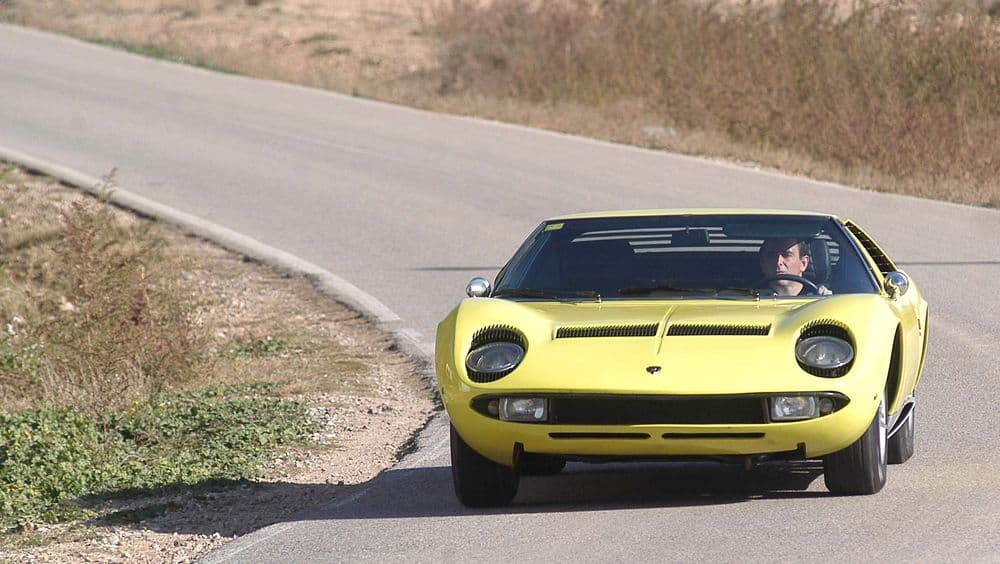
On the first Saturday of March 2026, at Broad Arrow's Amelia Island sale, a 1972 Lamborghini Miura P400 SV crossed the block carrying an unusual file: fifty-two years with a single owner, just over 18,000 miles, and originality down to the split-sump V12 and factory air conditioning that mark the last and most evolved SV cars (only thirteen were built to that final specification). Broad Arrow estimated it at $3.5 million to $4 million. It sold for $6,605,000, a new world auction record for the Miura by more than $1.7 million.
The same weekend, at the same sale, a Porsche Carrera GT set its own record at $6.715 million. The most important car Lamborghini ever built, the machine that invented the mid-engine supercar, topped out within about $110,000 of a mid-2000s Porsche, and a full order of magnitude below where a Ferrari 250 GTO or a Mercedes Silver Arrow trades. That gap is not a knock on the Miura. It is the structure of the entire Lamborghini investment case.
Lamborghini's compounding lives in a handful of design-significant cars and almost nowhere else, because the company was founded specifically to not go racing. Sorting the narrow band that compounds from the wide range that doesn't is the whole job here, and it is a shorter list than any other marque on this list.
Why Lamborghini's Investment Case Has No Racing Tier
Ferruccio Lamborghini built tractors, then grand touring cars, and was openly contemptuous of motor racing as a use of money he would rather put into the product. The consequence for collectors sixty years later is structural. Ferrari, Mercedes, Aston Martin, Jaguar, and Porsche each carry a top tier of competition cars (the 250 GTO, the W196, the DBR1, the D-Type, the 917) whose value rests on race history, tiny production, and provenance traceable through period results. Lamborghini has none of that. Its apex is the road car as a piece of sculpture.
So the marque scores oddly against the Autobahn Alpha Four-Factor Screen we apply to every marque on this list: production scarcity, provenance integrity, buyer-base breadth, and cultural resonance. On cultural resonance, the Miura and the Countach sit near the very top of the asset class, one having invented the supercar template and the other having drawn the wedge that hung on a generation's bedroom walls. The blue chips clear production scarcity cleanly at 150 and 151 cars, and buyer-base breadth is genuinely global, carried by the Gen X collectors raised on the poster.
Where Lamborghini gets complicated is provenance integrity, and that is where most of the money is won or lost in this marque. A Lamborghini investment is a bet on design significance rather than race results, which makes the investable catalog short and the gap to the rest of the range a cliff rather than a slope.
The Lamborghini Miura SV: The Marque's One Blue Chip
The Miura is the car that started everything, and the SV is the version that matters to an allocator. Lamborghini built roughly 764 Miuras between 1966 and 1973, but only 150 were the final P400 SV, with wider rear bodywork, revised suspension, and on the last cars that split-sump lubrication system. The standard P400 and P400 S are wonderful machines that trade in a roughly $1 million to $2 million band. The SV is the one that crossed into seven figures and kept climbing.
The data here is unusually clean. Hagerty's valuation tools show every Miura variant roughly doubling over the past decade, with the P400 SV moving from a $2 million to $2.5 million band up to $4 million to $5 million, before the $6,605,000 Amelia Island result reset the ceiling in March 2026. Hagerty's market commentary goes further, noting that no other car worth $1 million or more from the 1950s, 1960s, or 1970s has appreciated more than the Miura over that period. Against the marque's old rivals, the same source has the average condition-2 Ferrari up just 6.6% over five years. Lamborghini's best has been outrunning Ferrari's average.
The catch is exactly the one the screen flags. Because a documented SV commands a large multiple of an earlier car, the market has long contained P400 and S cars "converted" to SV specification, and genuine SVs vary in how much original structure survives. The premium attaches to factory-built, documented SVs with an unbroken history, ideally certified by Lamborghini's Polo Storico department, the marque's answer to Ferrari Classiche. The $6.6 million car had a fifty-two-year ownership chain and untouched mechanicals; a superficially similar SV with a murky conversion story is a far cheaper asset. In this market, the file is the investment.
The Lamborghini Countach as an Investment: LP400 "Periscopio" First
If the Miura is the blue chip, the Countach is the cult, and the two are not the same trade. The Countach ran from 1974 to 1990 across roughly 1,983 cars and four major series, and the investment-grade band is narrow and front-loaded.
The Countach LP400 "Periscopio"
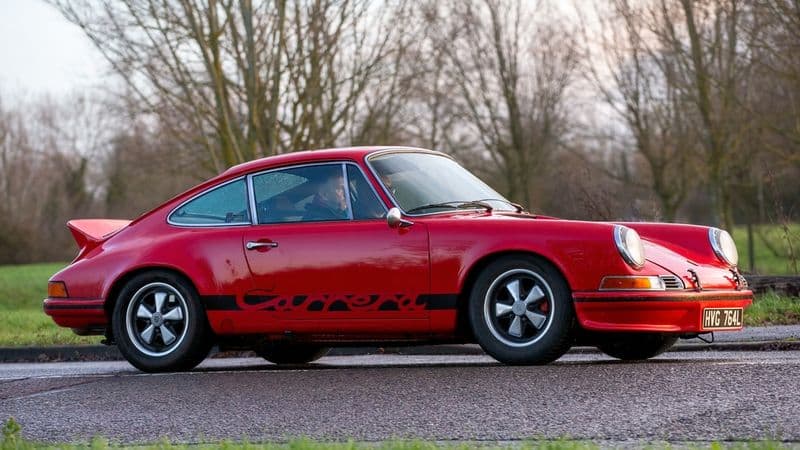
The first series, the LP400, is the one collectors call the "Periscopio," for the recessed channel in the roof that fed a periscope-style rearview mirror. Lamborghini built 151 of them, and they wear the purest expression of Marcello Gandini's original wedge: no wings, no box flares, the cleanest surfaces of any Countach. Clean, documented cars trade in a roughly $900,000 to $1.3 million band per Hagerty Price Guide and classic.com data, with the best examples pushing higher. The LP400 is to the Countach what the 1973 Carrera RS is to the air-cooled Porsche 911: the first, the rarest, and the reference everything later is measured against.
The Countach LP400S and LP500S
After the LP400 the math changes. The LP400S (235 built, 1978 to 1982) added the wide tires, riveted fender flares, and optional V-wing that fixed the Countach in popular memory, and the LP500S (about 321 built, 1982 to 1985) enlarged the engine. Both are desirable, and both trade below the Periscopio in like condition, with values set by originality and the bedroom-poster demand of Gen X buyers now in their peak earning years. The later 5000 Quattrovalvole and 25th Anniversary cars are the volume end of the range and price accordingly. The discipline is the same one that runs through this asset class: the earliest, rarest, least-adorned configuration is the one that compounds, and the special editions that came later mostly hold.
The Modern Lamborghini Halos: Diablo, Murciélago SV, and the Few-Offs
Below the two icons sits the part of the Lamborghini case most likely to be mis-sold, because "limited edition" and "investment-grade" are not the same phrase. A thin layer of modern V12 cars has earned the label. Most of the modern range has not.

The V12 Specials: Diablo GT, Murciélago LP670-4 SV
The cleanest modern compounders are the rare V12 specials. The Diablo GT, 80 built in 2000, is the standout: a road-homologated racing special that sold for $1,435,000 at RM Sotheby's Monterey in August 2025, against a $1.3 million to $1.6 million estimate. The Murciélago LP670-4 SV, 186 built before the Aventador took over the line, has roughly doubled off its circa-$450,000 sticker, with strong cars now in the $700,000 to $900,000-plus range per classic.com. The Diablo SV is the more affordable and more variable case: roughly 346 built, with a 1998 Monterey Edition bringing $527,500 at Gooding's Pebble Beach sale in 2025; ordinary examples trade well below.
The Few-Off Tier: Reventón, Centenario, Sián
Above the specials sit the genuine few-offs, built in dozens rather than hundreds: the Reventón (20 coupes and 15 roadsters), the Veneno (single digits of each body style), the Centenario (40 cars, evenly split coupe and roadster), the hybrid Sián FKP 37 (63 coupes and 19 roadsters), and the retro-bodied Countach LPI 800-4 (112 built). These are scarce by any standard, and they tend to be allocated to established collectors rather than sold openly, which keeps public auction data thin. They are investment-grade by production scarcity, but whether they compound depends on the same buyer-base test every modern hypercar faces, one that plays out over a decade of second and third owners, not a delivery-cycle flip.
The Aventador SVJ is the instructive exception. At 900 coupes it is a limited series, not a few-off, yet it is one of the few recent Lamborghinis to hold its value, trading around $550,000 to $750,000 against a roughly $520,000 list, supported by real scarcity and the production-car Nürburgring lap record it set in 2018. But "holds its value" is a much lower bar than "compounds," and an allocator should not blur the two. The SVJ is a good car that has not lost money. The Diablo GT is an asset.
What Doesn't Compound: Gallardo, Huracán, and Urus
The honest section is the one the sales floor skips. The cars that turned modern Lamborghini into a volume business are not investments, and the arithmetic is blunt about why.
The Gallardo is the clearest case. Lamborghini built 14,022 of them between 2003 and 2013, making it the best-selling car in the marque's history. Values have tracked roughly inflation: standard cars run $90,000 to $170,000, and even most special editions top out near $250,000 per Hagerty, which placed the Gallardo on its 2025 Bull Market List as a gentle riser rather than a breakout. The base Huracán follows the same flat curve, and most Urus configurations depreciate like the luxury SUVs they are. Gated-manual Gallardos and a few hardcore Performante and STO variants carry a scarcity story worth watching, but the standard cars will never approach Countach, Diablo, or Murciélago money. They are loved, usable, and fast, and none of that makes them a thesis. Pricing one as if it were is the most common mistake in this marque.
Running the Carrying-Cost Math
Every car worth owning in this guide first passes the Autobahn Alpha Four-Factor Screen: production scarcity, provenance integrity, buyer-base breadth, and cultural resonance. Lamborghini's blue chips pass it on the strength of cultural resonance and scarcity, with provenance integrity the swing factor that separates a documented Miura SV from a converted one. The second test is separate, and it is pure arithmetic.
A collector car has to outrun its carrying costs, meaning secure storage, agreed-value insurance, and scheduled maintenance, before it returns a real dollar. Vintage Lamborghinis are not cheap to keep, since a Miura or Countach V12 is a complex, parts-hungry engine. But those costs are roughly fixed in absolute terms, so they shrink as a share of value. On a $4.5 million Miura SV, even a generous $20,000 a year in storage, insurance, and upkeep is well under 1% of the asset, noise against the appreciation. On a $120,000 Gallardo, the same kind of fixed costs run 7% to 10% a year, which is precisely why a car that only tracks inflation never clears. The screen tells you which Lamborghini is investment-grade; the carrying-cost math tells you whether the tier you can afford pays. For this marque the two tests converge on a short list: the Miura SV, the LP400 Countach, and a handful of rare V12 specials.
Lamborghini vs. the Rest of the Alt-Asset Field
Against the other blue-chip marques, Lamborghini sits in a slightly humbling spot: its all-time apex is roughly an order of magnitude below the top of the asset class.

The table tells the structural story at a glance. At that same Amelia Island sale, a Porsche Carrera GT and a Lamborghini Miura SV finished within $110,000 of each other, both a full order of magnitude beneath the Ferrari and Mercedes apex. Lamborghini does not own a $50 million tier, and it never will, because it never built the racing cars that anchor one. What it owns instead is the best design-icon story in the business, and on a rate-of-change basis that story has lately been winning: per Hagerty, Lamborghini has outrun both Ferrari and Porsche.
Against traditional alternatives, the case is the familiar one for this asset class. Knight Frank's classic-car index returned roughly 118% over the past decade, about 8% annualized, before flattening to about 1.2% in 2024. The Miura's decade of doubling sits well above that line, with the thin correlation to equities that a satellite allocation wants. RM Sotheby's reported bidders from 82 countries in 2025, 46% of them first-time buyers, and the Gen X cohort raised on the Countach poster is now deploying real capital. The thesis is not that a Lamborghini beats the S&P 500 in every window. It is that two or three specific cars compound quietly, hold in a soft year, and sell into a global bid.
What to Watch in 2026 and 2027
The Miura SV record is a re-rating, not a one-off. The $6.605 million Amelia Island result was not an auction-night spike. It capped a decade in which, by Hagerty's reading, no other seven-figure classic appreciated more, and it followed a €3,942,500 (about $4.1 million) SV at RM Sotheby's Milan in January 2026. The ceiling moved because the floor did. Watch whether documented, factory-correct SVs pull further away from converted cars, which is the tell that the market is pricing provenance properly.
Polo Storico certification becomes the dividing line. As with Ferrari Classiche and the Porsche Certificate of Authenticity, Lamborghini's in-house heritage department is turning documentation into the asset itself. Cars with full Polo Storico paperwork will increasingly trade at a premium to superficially similar examples, and the spread is worth tracking on both the Miura and the LP400 Countach.
The modern few-offs face their first real secondary market. The Centenario, Sián, and Countach LPI 800-4 are entering the phase where original allocation buyers begin to sell. The next two years of second-owner transactions will reveal whether the few-off tier compounds or merely holds.
Generational rotation runs in the marque's favor. Cerulli Associates projects roughly $124 trillion in wealth transfer through 2048, with younger cohorts inheriting more than any before them. The Countach and the Miura are the Lamborghinis those buyers grew up wanting, which underpins demand for exactly the narrow band that compounds.
Structured access reaches the design-icon tier. For an investor who wants exposure to a documented Miura SV or LP400 Countach without sourcing, storing, insuring, and authenticating the car personally, fractional and SPV structures now exist, the same vehicles that bring blue-chip Ferrari and Porsche into an alternatives sleeve. Diligence on fees, exit timing, and originality verification still varies by manager, but the access problem is easing at the tier that matters.
The Lamborghini Thesis Is the Design, Not the Badge
Lamborghini is the marque that proves an investment case can rest on design alone. It never went racing, so it has no Silver Arrows and no GTOs, and its all-time auction apex sits where a used Porsche hypercar trades. And yet the Miura SV has been one of the best-performing collector cars on Earth over the past decade, because the car that invented the supercar is a finite object a global, generationally renewing buyer base wants to own.
The investable Lamborghini is a short list: the Miura SV, the Countach LP400 "Periscopio," and a thin layer of rare V12 specials and few-offs, each bought with the documentation verified and the provenance clean. Below that list, the marque becomes a collection of wonderful, fast, depreciating cars that should be priced as cars. The word "Lamborghini" is not the investment thesis. A factory-correct Miura SV with a fifty-year file is. Buy the design that mattered, verify the paper, and let the scarcity do the work.
Frequently Asked Questions
Q: Is Lamborghini a good investment? At a few specific tiers, yes. The Miura SV (150 built), the Countach LP400 "Periscopio" (151 built), and a thin layer of rare modern V12 specials such as the Diablo GT and Murciélago LP670-4 SV have compounded across cycles, and the Miura has been one of the best-performing collector cars of the past decade per Hagerty. But the marque has no racing blue-chip tier, and its volume cars do not compound: the Gallardo (14,022 built), the base Huracán, and most Urus configurations track roughly inflation at best. Tier, configuration, and documentation decide it, not the badge.
Q: Is the Lamborghini Miura a good investment? The Miura SV is the marque's one genuine blue chip. Hagerty data shows every Miura variant roughly doubling over the past decade, with the P400 SV moving from a $2 million to $2.5 million band up to $4 million to $5 million, and a 1972 SV set a world record at $6,605,000 at Broad Arrow's Amelia Island sale in March 2026. Standard P400 and P400 S cars trade lower, in a roughly $1 million to $2 million band. Factory-original, documented SVs command a large premium over cars converted from earlier specification, so provenance is everything.
Q: Is the Lamborghini Countach a good investment? Selectively. The first-series LP400 "Periscopio" (151 built) is the investment-grade Countach, trading in a roughly $900,000 to $1.3 million band for clean, documented cars per Hagerty and classic.com. The later LP400S, LP500S, and 5000-series cars are desirable but trade below the Periscopio in like condition, and the volume 25th Anniversary cars are the entry point rather than the thesis. As with the air-cooled Porsche 911, the earliest and least-adorned configuration is the one that compounds.
Q: Is the Lamborghini Aventador SVJ a good investment? It has held its value, which is not the same as compounding. With about 900 coupes built, the SVJ is a limited series rather than a few-off, and it trades around $550,000 to $750,000 against a roughly $520,000 list, supported by genuine scarcity and the production-car Nürburgring lap record it set in 2018. That makes it one of the few recent Lamborghinis not to lose money, but the rare V12 specials (the Diablo GT, the Murciélago SV) have a stronger appreciation case. Treat the SVJ as a car that holds, not an asset that grows.
Q: Which Lamborghinis are not good investments? Most of them, honestly. The Gallardo (14,022 built) tracks roughly inflation despite a 2025 Hagerty Bull Market List nod, the base Huracán follows the same flat curve, and most Urus configurations depreciate like the luxury SUVs they are. Recent limited editions bought above list at delivery often give the premium back within two to three years. These can be wonderful cars to own. They are not investment theses, and pricing them as if they were is the most common error in the marque.
Q: How do I invest in a Lamborghini without buying one outright? Fractional and SPV-structured ownership platforms now offer accredited investors exposure to investment-grade cars such as a documented Miura SV or LP400 Countach, without sourcing, storing, insuring, and authenticating the car personally. The structures professionalize the operational burden, including the all-important provenance verification, at the cost of some control. For an allocator, structured exposure to a documented design-icon Lamborghini is often more practical than sole ownership.

Joseph Chappius — Automotive Journalist
Fifteen years in wealth management. Now writing about collector cars, alternative assets, and the stories behind them. All articles →
-800x530.jpg&w=3840&q=75&dpl=dpl_DQiTLd73E64SRjzekpXdHoPoCuaA)