
Best Classic Cars to Invest In: A Marque-by-Marque Field Guide
Key Takeaways
- Five of the ten biggest collector-car auction sales of 2025 wore Ferrari badges, but Mercedes-Benz produced the single largest sale of the year (the $53M W196 R) and Porsche set multiple model records the next quarter.
- Inside every collectible marque, only a narrow tier of cars actually compounds. The rest are wonderful machines that don’t survive a carrying-cost spreadsheet.
- The Autobahn Alpha Four-Factor Screen (production scarcity, provenance integrity, buyer-base breadth, cultural resonance) is the same across marques. The marque only changes the specific names that pass through it.
- “Future classics” is the riskiest game in the asset class. The honest version of the question is which of today’s recent cars already check three of the four factors.
In one quarter of 2026, the collector market produced four data points that don’t fit a single narrative. The Ferrari Enzo’s auction record tripled to $17.875 million at Mecum Kissimmee in January. Three weeks later, RM Sotheby’s posted its best European sale on record in Paris, led by a 1960 Ferrari 250 GT SWB California Spider at €14 million. In early March, Broad Arrow set new world records at Amelia Island for the Porsche Carrera GT, the Porsche 959 Sport, and the Lamborghini Miura SV in a single weekend. And the prior year’s top single sale stayed where it had been since February 1, 2025: a 1954 Mercedes-Benz W196 R Stromlinienwagen at €51.155 million / $53.02 million, RM Sotheby’s Stuttgart.
Across those four data points, four different marques. None of them was an accident.
The phrase “best classic cars to invest in” is a useful Google query and a misleading frame. There is no single best marque. There is a small, identifiable group of marques whose top tiers have compounded across cycles, and inside each of those marques there is a narrow band of specific cars that actually does the work. This guide is the field map. Where a deeper guide exists, follow the link. Where it doesn’t, treat the profile as the brief and watch this space.
How to Read a Marque: The Autobahn Alpha Four-Factor Screen
Before any specific marque, the same screen applies. We call it the Autobahn Alpha Four- Factor Screen and use it on every marque page on this site. A car that fails any of these tends to behave like a depreciating luxury good once carrying costs are accounted for, regardless of badge.
1. Production scarcity. Lower is better. The halo-tier threshold sits roughly under 500 cars; the blue-chip tier sits under 100. A Ferrari 250 GTO has 36 examples; a Ferrari LaFerrari has 499. Both are scarce by global standards. Only one is HAGI Top scarce.
2. Provenance integrity. Factory records, marque-specialist registries, racing pedigree, matching numbers, original paperwork. At six- and seven-figure prices, the documentation is the asset. Marque-club certifications (Ferrari Classiche, Porsche’s Certificate of Authenticity, the Aston Martin Heritage Trust) are the closest things to clean title in this asset class.
3. Buyer-base breadth. A car that trades to bidders in 80+ countries (RM Sotheby’s reported bidders from 82 countries in 2025) survives regional shocks better than a car that depends on a single national cohort. The 1989 Daytona collapse was driven by a single overheated Japanese buyer base. Today’s healthier markets are intentionally global.
4. Cultural resonance. Does the design, the soundtrack, the racing history travel across generations? An air-cooled 911 reaches the kid raised on Risky Business and the executive raised on Le Mans. A late-model luxury cruiser doesn’t reach either.
Why Collector Cars for the full investment-thesis lens behind these factors.
The marques below are organized by where each one’s compounding actually lives.
Is Ferrari a Good Investment? The Three Markets That Don’t Behave Alike
Italy · 1947–present
Yes, but only at two of three tiers. Pre-1970 racing Ferraris and modern halo Ferraris (288 GTO through F80) have compounded across cycles. Production-volume Ferraris below the halo tier have not.
The Data · Tier 1 anchor: 1962 Ferrari 250 GTO (36 built) · Production scarcity (halo tier): 272 (288 GTO) to 499 (LaFerrari) · Current auction record: $51.7M (1962 250 GTO/330 LM, RM Sotheby’s New York, Nov 2023) · 5-yr segment performance (HAGI F, blue-chip Ferrari): ~+14% YTD through Nov 2024
Ferrari is the most-cited collector marque on Earth, and the most over-bought. The investment case collapses three different Ferrari markets that behave nothing alike.
Tier 1: pre-1970 racing Ferraris.
250 GTO, 250 GT SWB, 250 Testa Rossa, 275 GTB/4. Public auction records run from $38.5 million (1962 250 GTO “Bianco Speciale,” Mecum Kissimmee, January 2026) to $51.7 million (1962 250 GTO/330 LM, RM Sotheby’s New York, November 2023). Private sales have gone higher. These are finite cultural assets, not vehicles.
Tier 2: modern halo Ferraris.
288 GTO (272 built), F40 (1,315), F50 (349), Enzo (400), LaFerrari (499 + 210 Aperta), F80 (799 planned). For accredited investors with non- institutional capital, this is where the math works. Ralph Lauren’s Giallo Modena F50 sold for $9.245 million at RM Sotheby’s Monterey in August 2025, a 68% jump over the prior F50 auction record. The Enzo’s auction record tripled to $17.875 million at Mecum Kissimmee in January 2026.
Tier 3: production-run Ferraris.
360, F430, 458, California, Portofino: Hagerty’s segment data for these has moved sideways for four quarters. Wonderful cars; not investments.
Is Porsche a Good Investment? The Breadth Play Against Ferrari’s Apex
Germany · 1948–present
Yes, more broadly than Ferrari. Porsche’s investment case lives across generations of the 911, a hypercar tier (Carrera GT, 959, 918), and the motorsport halos. HAGI tracks it separately for a reason.
The Data · Tier 1 anchor: 1973 911 Carrera RS 2.7 (1,580 built) / 917 motorsport halos · Production scarcity (hypercar tier): 1,270 (Carrera GT), 337 (959), 918 (918 Spyder) · Current auction record: $6.715M (Porsche Carrera GT, Broad Arro Amelia Island, March 2026) · 5-yr segment performance (HAGI P, blue-chip Porsche): ~+1.1% YTD through Nov 2024; 964 +69% peak-to-peak
If Ferrari owns the apex of the auction leaderboard, Porsche owns the breadth. HAGI maintains a dedicated Porsche sub-index (HAGI P) for a reason: production volumes are higher across the board, but a meaningful share of Porsche’s catalog crosses the screen.
The 911, by generation.
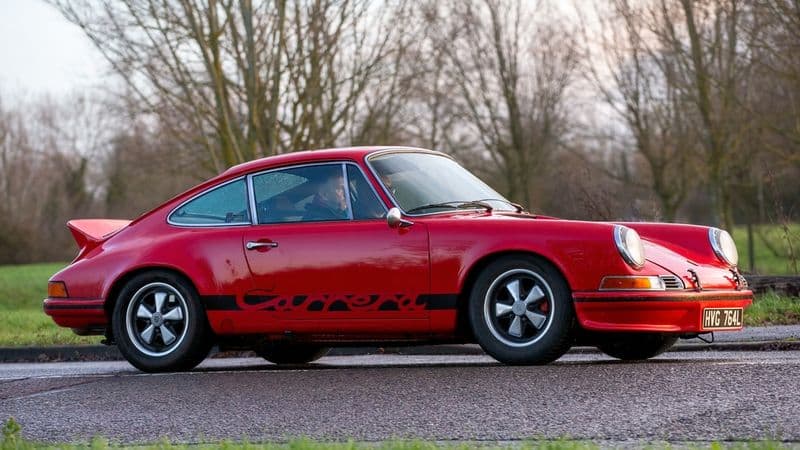
Air-cooled cars (1964–1998) are the classic compounders. The 1973 911 Carrera RS 2.7 and the 1995 993 Carrera RS define the bookends. The 964 generation (1989– 1994) appreciated roughly 69% over five years through the recent peak per Hagerty Price Guide and classic.com transaction data on Condition 2 964 Carrera 2 examples. Recent cooling has clipped 10–15% off mid-condition examples per the Hagerty Porsche segment index reading at the start of 2026, which is exactly the kind of softening blue-chip buyers wait for.
The hypercar tier.
The Carrera GT (1,270 built, 2004–2007) set a new world auction record at Broad Arrow Amelia Island in March 2026 at $6.715 million. The 959, particularly Sport-variant cars, set its own record at the same sale at $5.505 million. The 918 Spyder (918 built) is the modern entry to the same conversation.
The motorsport halos.
917, 956, 962: finite production, irreplaceable racing pedigree, the closest Porsche nalogue to Ferrari’s Tier 1. Public sales are rare; when they happen, they print.
→ Guide forthcoming: Porsche as an Investment.
Is Mercedes-Benz a Good Investment? The Quiet Holder of the All-Time Auction Record
Germany · 1926–present
Yes, at the pre-war Silver Arrow and 300SL Gullwing tiers. Mercedes produces the biggest single sales (the $142M Uhlenhaut, the $53M W196 R) without dominating headlines because its blue chips rarely change hands.
The Data · Tier 1 anchor: 1955 Mercedes-Benz 300 SLR Uhlenhaut Coupé (2 built) / W194/W196 program · Production scarcity (Gullwing tier): 1,400 (300SL Gullwing) / 1,858 (300SL Roadster) · Current auction record: $142M (1955 300 SLR Uhlenhaut, RM Sotheby’s Stuttgart, May 2022) — all-time public record for any car · 5-yr segment performance: stable; W196 R produced the year’s biggest 2025 sale at $53M
Mercedes is the marque that quietly produces the single largest sales without dominating the headlines. The 1955 Mercedes-Benz 300 SLR Uhlenhaut Coupé sold privately at RM Sotheby’s Stuttgart in May 2022 for approximately $142 million, the all-time public auction record for any car, by a margin nobody has come close to since. Three years later, the 1954 Mercedes-Benz W196 R Stromlinienwagen at the same auction house’s Stuttgart sale on February 1, 2025 produced the year’s biggest single sale at €51.155 million / $53.02 million.
The pre-war and Silver Arrow tier.
540K, 500K, the W194/W196 racing cars. Production measured in tens, racing pedigree second to none, almost all in private and museum hands.
The Gullwing and roadster tier.
300SL Gullwing (1,400 built) and 300SL Roadster (1,858 built) are the bridge between Mercedes’ racing history and the showroom. Clean, documented examples with original drivetrains continue to print at $1–2M+ for Gullwings.
The SL/Pagoda continuum.
230SL/250SL/280SL “Pagoda” (W113), 1963–1971; the broader R107 SL family (350SL through 560SL, 1971–1989). Not Tier 1 economics, but a reliable on-ramp to the marque for serious collectors.
→ Guide forthcoming: Mercedes-Benz as an Investment.
Is Lamborghini a Good Investment? The Design-Significance Play
Italy · 1963–present
Yes, in narrow bands. The Miura SV, certain Countach configurations, and a thin layer of modern halos compound. Gallardo, base Huracán, and most Urus configurations do not.
The Data · Tier 1 anchor: Miura SV (150 built, 1971–1973) · Production scarcity (modern halos): 20 (Sián FKP 37), 600 (Diablo SV), 350 (Aventador SVJ) · Current auction record: New Miura SV world record set at Broad Arrow Amelia Island, March 2026 · 5-yr segment performance: Miura SV and Countach LP400 “Periscopio” up strongly; Gallardo flat
Lamborghini is the Italian counterweight to Ferrari at the supercar tier. The market behaves differently because the catalog is shaped differently. There’s no Lamborghini equivalent of the pre-1970 sports-racing tier, and the marque’s investment case lives almost entirely in a small group of design-significant production runs.
The Miura.
Particularly the Miura SV (150 built, 1971–1973). Broad Arrow set a new world auction record for the Miura SV at Amelia Island in March 2026, alongside the Porsche records the same weekend. The Miura is the car that defined the mid-engine supercar template.
The Countach.
Particularly the LP400 “Periscopio” (151 built) and LP500S/LP400S configurations. Cult demand from Gen X buyers raised on the bedroom-poster era has lifted clean examples meaningfully over the past decade.
Modern halos.
Diablo VT/SV/GT, Murciélago LP670-4 SV, Aventador SVJ, the limited Sián/Centenario/Countach LPI tier. Selectively investment-grade; the broader Gallardo/Huracán production line is not.
→is Lamborghini a Good Investment? Miura to Modern Halos
Is Aston Martin a Good Investment? The British Blue-Chip Conversation
United Kingdom · 1913–present
Yes, at the pre-war racing and DB-series tiers. The DBR1, DB4 GT Zagato, and well- documented DB5s sit in the British blue-chip tier alongside any Tier 1 Ferrari. Modern halos depend on a still-globalizing buyer base.
The Data · Tier 1 anchor: DBR1 (5 built) / DB4 GT Zagato (19 built originally) · Production scarcity (modern halos): 77 (One-77), 24 (Vulcan), 150 (Valkyrie) · Current auction record: $22.55M (Aston Martin DBR1, RM Sotheby’s Monterey 2017) · 5-yr segment performance: stable; DB5 and DB4 GT Zagato carry the marque
Aston Martin’s investment case is built on three things: pre- and immediate post-war competition cars, the DB series of the 1950s and 1960s, and a thin layer of modern halos. Production runs at the Tier 1 end are measured in dozens.
The pre-war and racing tier.
DB3S (31 built), DBR1 (5 built; chassis DBR1/1 sold for $22.55 million at RM Sotheby’s Monterey 2017, a multi-race-winning works car), DBR2 (2 built). Almost entirely in major collections.
The DB era.
DB4 (1958–1963; ~1,110 built across all variants), DB5 (1963–1965; 1,059 built, including the Bond car), DB6 (1965–1971). The DB4 GT Zagato (19 built originally) sits in the British blue-chip tier alongside any Tier 1 Ferrari. Standard DB5 saloons trade in a wide band depending on documentation and Bond provenance.
Modern halos.
One-77 (77 built), Vulcan (24 built), Valkyrie (150 built). Each is investment- grade by production scarcity; the longer-term picture depends on how the buyer base globalizes.
Deep guide: Is Aston Martin a Good Investment? The British Blue-Chip Conversation
Is McLaren a Good Investment? The Marque the F1 Carries
United Kingdom · 1985–present (road cars)
Yes, but the thesis is almost entirely the F1. Of 106 produced, every one is a verified blue chip. Below the F1, the P1, Senna, and Speedtail are investment-grade by scarcity; the 720S/750S/Artura production line is not.
The Data · Tier 1 anchor: McLaren F1 (106 built, 1992–1998) · Production scarcity (modern halos): 375 (P1), 500 (Senna), 106 (Speedtail), 25 (Solus GT), 399 (W1) · Current auction record: $25.3M (1994 McLaren F1, RM Sotheby’s Abu Dhabi, December 2025) · 5-yr segment performance: F1 examples doubled over the period; modern halos early in the cycle
McLaren’s collector case rests on a single car that carries the entire marque thesis at the top, and a handful of modern limited-production cars beneath it.
The F1.
106 produced, 1992–1998. The 1994 McLaren F1 at $25.3 million (RM Sotheby’s Abu Dhabi, December 2025) anchors the marque. The F1 LM and GTR variants are even rarer. Of the marques on this list, only Ferrari has a single model that has come close to defining a tier the way the F1 has.
The modern limited-runs.
P1 (375 built), Senna (500 built), Speedtail (106 built, deliberately echoing F1 scarcity), Solus GT (25 built), Elva (149 built), W1 (399 planned). Investment-grade by production volume; the buyer base test will play out over the next decade.
The 720S/750S/Artura production line.
Beautiful machines; not investments.
→ Guide forthcoming: McLaren as an Investment.
Is BMW a Good Investment? The Affordable-Tier Compounder
Germany · 1916–present
Yes, at the entry tier of the asset class. The 507 and M1 are blue chips by any standard, but BMW’s real investment case lives in M-division cars (E30 M3, E46 M3 CSL) riding the Gen X demographic wave.
The Data · Tier 1 anchor: BMW 507 (252 built, 1956–1959) / M1 (453 built) · Production scarcity (M-division): 1,383 (E46 M3 CSL), 150 (E92 M3 GTS) · Current auction record: ~$5M+ range for top 507 examples; E30 M3 EVO II at ~$250K+ · 5-yr segment performance: E30 M3 edged S&P 500 over 2015–2025 per Autofolio
BMW is the affordable-tier compounder on this list. The marque’s halo cars are scarce by any standard, but most of BMW’s investment case lives in a small group of M-division and motorsport-derived cars that have ridden the Gen X and millennial demand wave into serious territory.
The proper halos.
507 (252 built, 1956–1959; among the rarest postwar BMWs), M1 (453 built,
1978–1981), Z8 (5,703 built but design-significant). The 507 sits firmly in the British/German
pre-war-adjacent blue-chip conversation.
The M-division compounders.
E30 M3 (1986–1991) edged out the S&P 500 over 2015–2025 per
Autofolio’s analysis. E46 M3 CSL (1,383 built), E92 M3 GTS (150 built), E46 M3 CS, and the recent
3.0 CSL Hommage tribute production all live in the same demographic-wave story.
The classic touring tier.
2002tii, 3.0 CSL “Batmobile” (1,265 built across variants), 635CSi.
Lower entry tickets, modest but documented appreciation.
Is BMW a Good Investment? The 507, the M1, and the M Cars
Is Jaguar a Good Investment? Britain’s Blue Chip at a Discount
United Kingdom · 1922–present
Yes, with caveats. The D-Type, XKSS, and lightweight E-Types are blue chips. Jaguar’s headline numbers trail Aston Martin’s because the global buyer base is narrower — which is also why the value case is the strongest on this list for patient capital.
The Data · Tier 1 anchor: D-Type (87 built, ~71 surviving) / XKSS (16 built) · Production scarcity (E-Type Lightweight/Low-Drag): 12 + 2 built · Current auction record: $21.78M (1955 Jaguar D-Type, RM Sotheby’sMonterey 2016) · 5-yr segment performance: flat-to-modestly-up; E-Type Series 1 Roadster the most cited Tier 2 entry
Jaguar is the British marque whose blue-chip cars trade at meaningful discounts to their Aston Martin equivalents, partly because of historically softer brand stewardship at the top of the market, partly because the global buyer base for Jaguar is narrower than for Ferrari or Porsche. For collectors who can tolerate that, the value case is the strongest on this list.
The racing and pre-war tier.
D-Type (87 built, 1954–1957; only roughly 71 thought to survive), XKSS (16 built; Steve McQueen owned one), C-Type (53 built). These trade at high seven and eight figures when they appear; the D-Type sold for $21.78 million at RM Sotheby’s Monterey 2016.
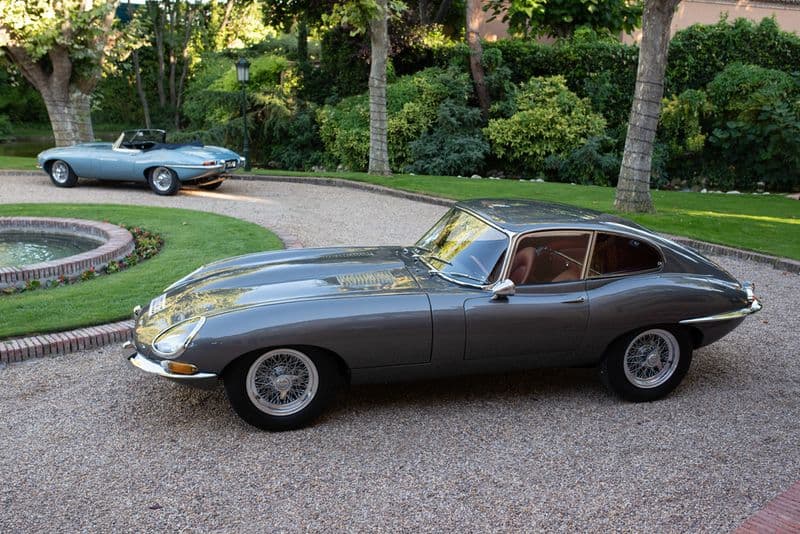
The E-Type.
Series 1 3.8L (1961–1964) and Series 1 4.2L (1964–1968) are the design-era cars; the Series 1 Roadster is the most-cited Tier 2 entry on this list. Lightweight and Low-Drag E-Types (12 + 2 built) sit in the Tier 1 conversation.
Modern halos.
XJ220 (281 built, 1992–1994) is the compounding modern halo; the F-Type Project 7 and other recent limited runs are early in the investment-grade conversation.
Is Jaguar a Good Investment? D-Types, E-Types, and the British Icon
What Doesn’t Compound
Before naming the future classics, the more important section: what almost never works. The brief asks about the best cars to invest in, which honestly requires naming what isn’t. Most of what’s marketed as “investment grade” by retail dealers fails the Autobahn Alpha Four-Factor Screen. The math is the explainer: a $50,000 car carrying $4,000–$6,000 in annual storage, insurance, and maintenance is paying 8–12% of asset value every year before it appreciates a dollar. Any car that doesn’t have scarcity, documentation, and demand pulling it forward at that rate is a depreciating luxury good in slow motion.
Specific categories that frequently masquerade as investments and almost never are:
- Production-run modern Ferraris (most 360s, F430s, 458s, California Ts, Portofinos): Hagerty segment data has been flat for four quarters
- Late-model Lamborghinis without halo status (Gallardo, Huracán base, most Urus configurations)
- Mercedes and BMW non-M production cars, regardless of trim: they are wonderful daily drivers
- Most American muscle outside the documented Hemi, Yenko, and AMX cohort: values softened 8–10% in the post-2022 retracement, with mid-tier 1980s and 1990s muscle giving back 15–30% from peak
- Recent supercars sold above MSRP at delivery: the speculative premium typically evaporates within 24–36 months, regardless of badge
If a car is loved, that’s a good reason to own it. The discipline is to refuse to price it as an investment thesis when it isn’t one.
What Future Classic Cars Are Worth Investing In?
A small group of recent cars (typically 10–25 years old) that already check three of the four factors: production scarcity, design or motorsport significance, and emerging cohort demand. Honda NSX, Lexus LFA, Nissan Skyline R34, BMW E46 M3 CSL, and Porsche 996 GT3 lead the list.
The phrase “future classic cars” is the most-searched and the most-abused query in the asset class. Predictions about which cars will be valuable in twenty years are mostly predictions about twenty-year taste. There’s no shortcut. What can be observed is which recent cars already check three of the four factors in the screen above.
Hagerty’s segment indexes provide the real signal. The Japanese Car Index, the Supercar Index, and the RADindex (1980s–1990s collectibles) have each posted multi-year gains in the 42–73% range over the past five years, against a flat-to-down broader market. Per Hagerty Price Guide transaction data on Condition 2 examples, the Honda Civic Si appreciated from approximately $15,500 in 2016 to roughly $33,400 today, a 115% gain in a decade. The 2006–2013 Corvette Z06 made the Hagerty 2026 Bull Market List. None of these are dynastic-money cars, but the wave is observable.
The candidates that meet three-of-four most cleanly:
- Honda NSX (NA1/NA2): design significance, motorsport pedigree, low U.S.-market production (roughly 8,900 units 1991–2005) against an enthusiast cohort that has aged into peak earning years
- Toyota Supra Mk4: cultural resonance amplified by film and gaming, 25-year U.S. import eligibility now reached for nearly all variants
- Nissan Skyline GT-R R32–R34: motorsport pedigree, restricted U.S. import history, R34 entered eligibility starting 2024–2026
- Lexus LFA: 500 built, halo design, V10 credentials
- BMW M3 E46 CSL: 1,383 built, handling pedigree, narrow buyer base by design
- Porsche 996 GT3 / 996 GT2: air-cooled-adjacent feel, limited production, cleanest pre- PDK driver’s cars
- Ferrari 360 Challenge Stradale: Tier-2.5 (between halo and production), thin production, motorsport derivation
- Honda S2000 AP1 and Mazda RX-7 Spirit R: 25-year U.S. import eligibility cleared for AP1 in April 2024; Spirit R clears in 2027
The honest caveat: future-classic prediction has been wrong more often than right in the broader asset class. Cars that look obvious at year ten often disappoint at year twenty as taste shifts. The cars on this list that already command structural premiums (NSX, LFA, R34) are safer bets than the cars that depend on a still forming demographic wave (current GT3 RS variants, recent McLaren limited-runs).
→ Guide forthcoming: How to Spot a Future Classic.
Choosing a Marque: The Best Classic Cars to Invest In
The framework that runs through every marque profile in this guide pulls into one decision rule. If you can’t articulate which tier of which marque you’re buying, you’re not investing — you’re shopping.
The best classic cars to invest in are not a list of badges. They’re the cars within each marque that pass the Autobahn Alpha Four-Factor Screen, sit at a value tier where carrying costs round to noise, and benefit from a buyer base that doesn’t depend on a single regional cohort. Across Ferrari, Porsche, Mercedes-Benz, Lamborghini, Aston Martin, McLaren, BMW, and Jaguar, the names change. The discipline doesn’t.
The marque-specific guides linked above (and the ones forthcoming) walk the tiers and the math at the level a serious allocator needs. The hub piece is the map. The guides are the territory.
Frequently Asked Questions
Q: What are the best classic cars to invest in?
The cars within each major collector marque that pass the Autobahn Alpha Four-Factor Screen: production scarcity (typically under 500 built), provenance integrity (factory records, marque-club certification, racing pedigree where applicable), buyer-base breadth (global, not regional), and cultural resonance (designs and stories that travel across generations). Specific names that pass cleanly include pre-1970 racing Ferraris (250 GTO, 250 GT SWB), modern halo Ferraris (F40, F50, Enzo, LaFerrari), air-cooled Porsche 911s with documentation, the McLaren F1, Mercedes Gullwings and Silver Arrows, Aston Martin DB4 GT Zagato and DB5, Lamborghini Miura SV, BMW 507 and M1, and Jaguar D-Type and XKSS. Each is covered in detail in the marque-specific guide.
Q: Which classic cars appreciate the most?
Over the past decade, blue-chip cars tracked by Knight Frank’s classic car sub-index returned roughly 118% cumulatively, or about 8% annualized. Within that, individual outliers have done much more: a 1997 Ferrari 355 appreciated approximately 300% from 2015 to 2025 per Autofolio’s analysis (versus 193% for the S&P 500), while air-cooled Porsche 911 generations like the 964 gained 69% over five years. At the very top, the Schumacher-driven Ferrari F2001 sold for approximately $18.39 million (€15.98M) at RM Sotheby’s Monaco in May 2025, more than double its $7.5 million result in 2017.
Q: What is a future classic car?
A “future classic” is a recent vehicle (typically 10–25 years old, sometimes newer) that already shows scarcity, motorsport or design significance, and emerging demand from a specific buyer cohort. Honda NSX, ToyotaSupra Mk4, Nissan Skyline GT-R R32–R34, Lexus LFA, BMW E46 M3 CSL, Porsche 996 GT3 and 996 GT2, and Ferrari 360 Challenge Stradale are widely cited examples. Hagerty’s Japanese Car Index, Supercar Index, and RADindex have each gained 42–73% over the past five years, suggesting the cohort effect is real, though future-classic prediction is the riskiest game in the asset class.
Q: Are Porsches or Ferraris a better investment?
They behave differently. Ferrari’s investment case is concentrated at the apex: pre-1970 racing cars and modern halos that command the largest auction prints (five of the ten biggest 2025 sales were Ferraris). Porsche’s investment case is broader: the marque produces more cars collectors want to own, with HAGI maintaining a dedicated Porsche sub-index (HAGI P). At equivalent investment-grade tiers, neither categorically beats the other; the right answer depends on the specific car’s tier within each marque. The Ferrari guide and the forthcoming Porsche guide cover each in detail.
Q: How do I choose a marque to invest in?
Start with the Autobahn Alpha Four-Factor Screen and the value tier that matches your capital. A $250,000 budget points at the entry-tier compounders: Porsche 996 GT3 / GT2, BMW E46 M3 CSL, Ferrari 360 Challenge Stradale, Lexus LFA-adjacent Japanese halos, certain Murciélago variants. A $500,000–$2 million budget opens up serious modern halos (F40, F50, Carrera GT, air-cooled 911 RS variants, McLaren P1, recent Speedtails). Genuine blue-chip Tier 1 sits at $5 million and above. Within whichever tier matches, pick the marque whose specific cars you can underwrite, meaning you can read the chassis history, evaluate the documentation, and recognize a clean example from a problematic one. If you can’t do that personally, work with a structured holder or specialist who can.

Joseph Chappius — Automotive Journalist
Fifteen years in wealth management. Now writing about collector cars, alternative assets, and the stories behind them. All articles →
-800x530.jpg&w=3840&q=75&dpl=dpl_DQiTLd73E64SRjzekpXdHoPoCuaA)