Why Collector Cars: The 2026 Investment Thesis

Key Takeaways
- Hagerty reported $4.8 billion in collector car auction and online sales in 2025, an all-time record, even as its broad Market Rating sat at 58.28, the lowest reading in nearly 15 years. Both numbers are true. The market is bifurcated, and the bifurcation is the thesis.
- The case for collector cars as an alternative investment rests on three things: scarcity, generational demand, and behavior that doesn’t track equities. The case against rests on cost drag, tax treatment, and illiquidity. Both are real.
- For an accredited investor, the question isn’t “are classic cars a good investment?” in the abstract. It’s whether this car, at this value tier, held for this horizon, clears the hurdle after costs and taxes.
- Most of what circulates online about classic-car taxation, correlation, and 1031 exchanges is wrong. The article walks through five myths and what the IRS, SEC, and current data actually say.
In early 2026, two numbers landed in the collector car market and didn’t agree with each other.
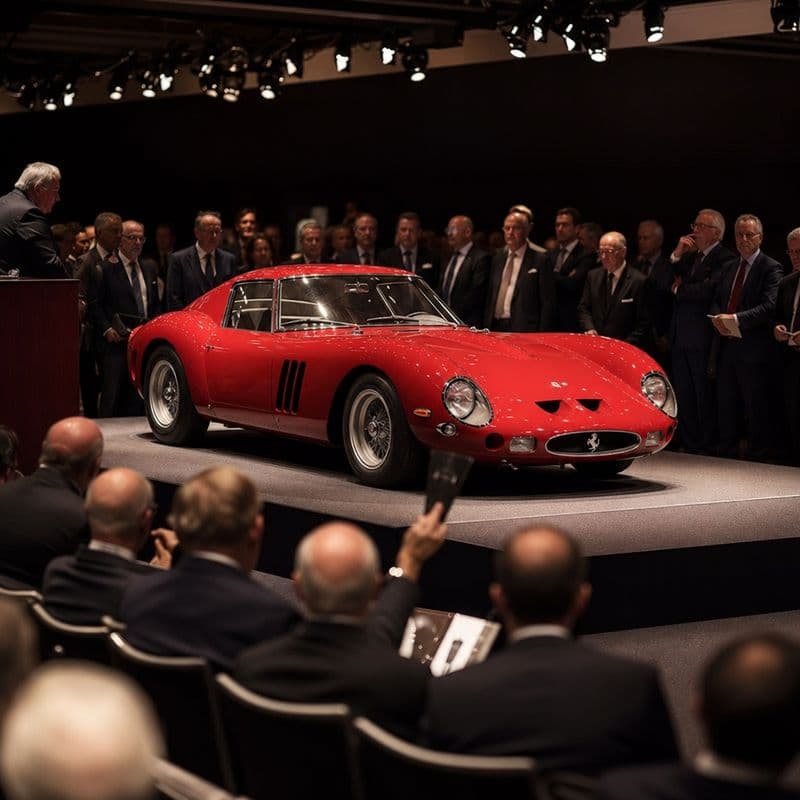
The first came from Hagerty, via CNBC: auctions and online sales of collector cars hit roughly $4.8 billion in 2025, up 10% year-over-year. An all-time record. RM Sotheby’s alone posted more than $1 billion. Seven-figure cars crossed $1 billion in aggregate value for the first time in market history.
The second came from Hagerty’s data team weeks later: the Hagerty Market Rating, which gauges the broad health of the collector market across condition values, transaction frequency, and seller sentiment, fell to 58.28 to start 2026, the lowest reading in nearly 15 years. Both numbers are correct. The dollars at the top are unprecedented; the breadth across the middle is the weakest it has been since the years right after the financial crisis. That gap is the story.
The version that ranks on Google asks are classic cars a good investment, and assumes a yes-or- no answer. The version worth answering doesn’t.
In This Series
- How It Works: the SPV and fund mechanics behind investing in classic cars without operating a garage.
- Market Index: the live performance dashboard for the Autobahn Alpha investment universe and the indexes referenced below.
- Marques: A Field Guide: by-brand investment cases for Ferrari, Porsche, Mercedes-Benz, Lamborghini, Aston Martin, McLaren, BMW, and Jaguar.
- Collector Cars as an Asset Class: the institutional-grade version of the diversification argument.
- Your Car Can Outperform the S&P 500: the net-of-costs, net-of-tax comparison framework.
- Why Collector Cars Don’t Care About the Strait of Hormuz: the macro-shock behavior case.
- Your Portfolio Is on Fire: Go Buy a Ferrari: the deepest current marque guide.
- Future Classics: what’s compounding now in the 10–25-year cohort.
- Investor Education: glossary, tax basics, due diligence checklists.
What “Investment-Grade” Even Means
Before getting to returns, three definitions deserve to be straightened out, because most arguments about collector cars hinge on which definition the speaker is using.
Classic, collector, antique. No universal definition. The Classic Car Club of America’s “Full Classic” designation covers specific high-end cars built between 1915 and 1948. The Antique Automobile Club of America uses 25 years. Most U.S. state DMVs settle in the 25–30-year range for historic plates. The insurance and auction industries use “collector car” loosely to mean any vehicle held for enthusiast or investment reasons rather than transportation. For the purposes of this thesis, collector car means a vehicle bought primarily for capital preservation and appreciation, which can be a 1962 Ferrari 250 GTO or a 1995 BMW M3 depending on the buyer.
Accredited investor. The SEC’s threshold is $1 million net worth excluding primary residence, or $200,000 income individually ($300,000 jointly) in each of the prior two years with the same expectation in the current year. The thresholds were last set in 1982 and have not been indexed to inflation. A House bill to expand the definition passed in mid-2025 but is not yet law.
Blue chip. Informal industry shorthand for limited-production cars with verifiable provenance, racing or design significance, and a standing global bid. The Historic Automobile Group International’s HAGI Top index (about 50 cars, methodology public) is the closest thing to a blue-chip basket that exists. Most arguments framing “classiccars” as a single asset class are talking about HAGI Top constituents whether they say so or not.
The thesis below is about that narrow sliver (the cars institutional research actually tracks) and the structural reasons sophisticated capital still allocates to it. Everything else is a hobby with hopes attached.
The Real-Assets Argument
Collector cars sit inside a broader basket Knight Frank, UBS, and Capgemini track under names like “passion assets” or “collectibles”: art, fine wine, watches, rare whisky, classic cars, and handbags.
UBS’s 2025 Global Family Office Report, built on responses from 317 single-family offices with average AUM of $1.1 billion, shows the strategic allocation across the world’s largest private balance sheets: roughly 30% equities, 21% private equity, 18% fixed income, 11% real estate, 8% cash, 4% hedge funds, 4% private debt, 2% gold, and 1% art and antiques. UBS doesn’t break out collector cars as a separate line; cars sit inside that 1% alongside other passion assets. The dollar weight is small. The persistence of the allocation across cycles is what matters.
Knight Frank puts a different number on the same idea. A million dollars invested in 2005 and tracked against the Knight Frank Luxury Investment Index (a basket of art, classic cars, watches, wine, jewelry, and similar assets) would have grown to approximately $5.4 million by the end of 2024. The same million in the S&P 500 would have been worth approximately $5 million over the same window, with a deeper drawdown through 2008–2009.
That figure deserves an asterisk: it’s the whole KFLII, not the classic car component on its own. The classic car sub-index returned approximately +1.2% in 2024, barely positive, well below the S&P’s 23% that year. Over 10 years through mid-2024, the classic car component returned roughly 118%, or about 8% annualized.
The real-assets argument doesn’t claim cars beat equities. It claims they behave differently from equities, and that the long-arc compounding has been competitive enough to justify a satellite weight. The supply of 1962 Ferrari 250 GTOs is exactly 36, none have been built since 1964, and that number can only go down through attrition. The supply of a public company’s shares is whatever the board votes to issue. Real assets derive value partly from being uncountable in any other way. That property is the point.
Collector Cars as an Asset Class for the institutional-grade version of this argument.
The Returns Reality, Honestly
There are three indexes that matter for a serious conversation about collector car returns. They tell three different stories from the same market.
Knight Frank Luxury Investment Index, classic cars sub-component. +1.2% in 2024. The broader KFLII fell -3.3% in 2024, only its third annual decline in history, and was nearly flat at -0.4% in 2025. Cars were among the better-performing luxury categories in a soft year, but the asset class did not protect against inflation in real terms.
HAGI indexes. HAGI Top tracks roughly 50 blue-chip postwar cars; HAGI F covers Ferrari, HAGI P covers Porsche. HAGI Top posted a 2.3% month-over-month gain in November 2024. Year-to-date through that point, HAGI P was up roughly 1.1% and HAGI F up approximately 14%. Full back-series data sits behind a subscription, which is itself worth noting. When methodology is paywalled, claims should be conservative.
Hagerty Market Rating. The broad-market gauge sat at 58.28 entering 2026, the lowest reading in nearly 15 years, and has declined in 37 of 43 months since its summer 2022 peak. Of Hagerty’s 11 segment sub-indexes, 7 are below their January 2024 levels.
The bifurcation is the point. Top-end volume hit a record $4.8 billion in 2025 even as the broader market softened. Five of the ten biggest collector-car auction sales of 2025 wore Ferrari badges. The 1955 Mercedes Benz 300 SLR Uhlenhaut Coupé that set the all-time public auction record at approximately $142 million did so back in May 2022, and nobody has come close since. The cars that compound are not the cars that fill out the Hagerty Hundred.
Asset class
- Classic cars (KFLII sub-index)
- Watches (KFLII / WatchCharts)
- Fine art
- Fine wine (Liv-ex 100)
- Rare whisky
- Handbags
- S&P 500 (total return)
Sources: Knight Frank Wealth Report 2025 and 2026 KFLII update, S&P Dow Jones Indices, WatchCharts, Liv-ex. 10-year cumulative figures approximate through mid-2024.
The bear case writes itself from this table. The bull case is more interesting: if the goal of the satellite allocation is to behave unlike the S&P 500, the years that cars lag are the same years that confirm what they’re for.
Your Car Can Outperform the S&P 500 walks through the net-of-costs version of this comparison and the framework for when each side wins.
Why Not Just Buy More S&P 500?
The honest answer for most investors is that’s exactly what they should do. The S&P 500 with reinvested dividends is the most efficient wealth-building instrument ever invented. It costs three basis points to own. It rebalances itself. It pays you while you sleep.
The case for adding collector cars isn’t that they beat the index. It’s that they don’t track it.
Across the three most recent macro shocks (the COVID drawdown of March 2020, Russia’s invasion of Ukraine in February 2022, and the 2026 Strait of Hormuz crisis), the S&P 500 traded down between 10% and 34% on the headline. The collector car market posted gains, held at all- time highs, or set regional auction records in the same windows. Cars purchased in 2020 and resold in 2021 returned a median 18.7% per Hagerty’s transaction data. RM Sotheby’s posted its highest-grossing European sale ever in Paris in early 2026 with the S&P down on the year.
Academic work on the topic is thin. Laurs and Renneboog published in the Journal of International Financial Markets, Institutions and Money in 2019 that classic cars exhibit low correlation with equities and negative correlation with bonds, bills, and gold. There is no widely cited peer-reviewed study that produces a single classic-car-to-S&P beta number; phrasing like “uncorrelated” overstates what the literature actually says. Lower historical correlation than most public-market assets is the conservative, accurate framing. For an investor whose risk model assumes everything in the book moves together under stress, an asset that doesn’t get the memo is structurally useful even when its raw return is mediocre.
Why Collector Cars Don’t Care About the Strait of Hormuz for the full mechanism behind why the asset class doesn’t react.
What People Get Wrong
The collector-car-as-investment conversation has accumulated more than its share of folklore. Five claims show up in nearly every retail-facing article, and all five are wrong.
“You can 1031 exchange one Ferrari for another.” Untrue since January 1, 2018. The Tax Cuts and Jobs Act limited Section 1031 like-kind exchanges to real property only. Personal property (collector cars, art, equipment, aircraft) was permanently removed. Unlike most TCJA provisions, this change does not sunset.
“Collector car gains are tax-free if held over a year.” Untrue. The IRS treats collectibles under IRC §1(h)(4): long-term gains are taxed at the lesser of 28% or the taxpayer’s ordinary marginal rate. The 3.8% Net Investment Income Tax can stack for high earners, pushing the effective federal rate to roughly 31.8%. Whether the 28% cap applies also depends on whether the taxpayer is classified as a dealer, investor, or hobbyist, a fact-and-circumstances determination, not a holding-period one.
“Classic cars beat the S&P 500 over every long horizon.” True for windows ending mid-2024 against the Hagerty Blue Chip Index; false for windows ending late 2024 and 2025 against the same benchmark. The S&P caught up and pulled ahead. The honest version of the claim specifies the index and the window.
“Gen Z doesn’t want collector cars.” Hagerty’s 2024 Future of Driving research found 60% of Gen Z respondents expressed interest in collector vehicles versus 31% of Boomers; roughly 32% said they have owned or currently own one. Demand composition is shifting toward Mk4 Supras and air-cooled 911s, away from pre-war Packards, but the demand isn’t disappearing. The real generational risk is concentrated in the pre-war segment, not the asset class.
“Classic cars are uncorrelated with stocks.” No publicly available peer-reviewed study produces a single correlation coefficient for classic cars against the S&P 500. Laurs and Renneboog (2019) shows low correlation, not zero. The defensible framing is historically lower correlation than most public-market assets. Anyone selling “uncorrelated” without a coefficient is selling vibes.
Where Collector Cars Actually Fit
For accredited investors who already hold a diversified book (equities, fixed income, real estate, perhaps private credit and some art or wine), the question isn’t replacement. It’s whether a satellite allocation to non-correlated tangible assets earns its place. Most allocators who include real assets at all sit in the 5–15% range across the satellite sleeve, with collector cars sharing that bucket with art, wine, watches, and select alternatives.
The math isn’t symmetric across value tiers. A car held for ten years carries a roughly fixed annual cost burden(climate-controlled storage at $1,800–$4,800, agreed-value collector insurance, scheduled maintenance and consumables) totaling somewhere in the $2,500– $10,000 range. On a $500,000 car, that drag rounds to 0.5–1.4% of asset value annually, comparable to an actively managed fund’s expense ratio. On a $50,000 car, the same fixed costs eat 5–14% of value annually, and the appreciation needed to clear that hurdle is structurally unrealistic. The asset class works upward; it does not work downward.
The quietly important tax wedge is the §1014 step-up in basis at death. Heirs reset cost basis to fair market value, which makes a long-held appreciated collector car one of the cleaner positions to hold through to estate transfer. It’s the standard rule for capital assets, but for a buy-and-hold thesis, it’s the strongest tax case in the toolkit.
The operational side is real. A serious collector car requires storage, insurance, marque- specialist preventive maintenance, and (at sale) auction logistics or private-sale brokerage. Investors who don’t want to staff that themselves increasingly access the asset class through structured vehicles (single-car SPVs, diversified pools, family-office funds) that handle custody, certification, and exit professionally. The structures don’t eliminate market risk; they address the operational friction that historically pushed the asset class out of reach for non dynastic capital.
Marques: A Field Guide to Collector Car Brands That Compound for the by-marque view of where the compounding actually lives, and Your Portfolio Is on Fire: Go Buy a Ferrari for the deepest current marque guide.
The Risks, Said Plainly
Three risks deserve to be named, not because they invalidate the thesis but because anyone who can’t articulate them shouldn’t be buying.
Illiquidity and transaction costs. Major auction houses charge buyer’s premiums in the 12– 15% range plus consignment fees. A round trip can absorb 15–20% of the asset’s gross value before any appreciation. Selling timelines run weeks to months even in a healthy market.
Taste and generational risk. The 1989 Ferrari Daytona case still haunts the market: Ferrari values rose roughly 900% in the late 1980s, pulled by Japanese buyers flush with real-estate- bubble cash, and by the mid-1990s many of those cars traded at 25% of peak. Today’s buyer base is structurally healthier: RM Sotheby’s reports bidders from 82 countries in 2025, 46% first-timers. But the recent Ferrari Enzo move (auction record tripled to $17.875 million in a single quarter at Mecum Kissimmee) is exactly the price action that preceded the 1989 correction in specific segments. Speculative spikes deserve a longer pause than fundamental repricings.
Provenance fraud. At six- and seven-figure prices, documentation is the asset. The analogous risk to mass-market odometer fraud (which NHTSA estimates at roughly 450,000 sales annually across the broader U.S. used market) is VIN cloning, restamped engine blocks, and fabricated chains of ownership. Mitigation is mature: Ferrari Classiche certification, Porsche’s Certificate of Authenticity, marque-club registries, and marque specialist pre-purchase inspections. Only for buyers who insist on it.
So, Are Classic Cars a Good Investment?
Yes — for the right car, the right buyer, and the right horizon.
That’s not a dodge. It’s the actual answer.
For a $500,000+ blue-chip vehicle held for ten or more years through a structured holder, with marque-grade diligence on the front end and patient exit timing on the back, the post-cost, post-tax math is competitive with other satellite alternatives and the diversification benefit is real. For a sub-$100,000 car held casually by a buyer paying retail and selling under pressure, the math doesn’t clear the carry. Both versions of the asset class wear the same name. Only one belongs in a portfolio conversation.
The S&P 500 is still the most efficient wealth-building instrument ever invented. It just doesn’t show up at Pebble Beach.
Frequently Asked Questions
Q: Are classic cars a good investment?
For accredited investors with a multi-year horizon and access to specialist sourcing, the top tier (blue-chip cars tracked by indexes like HAGI Top) has historically compounded at roughly 8% annualized over the past decade per Knight Frank’s classic car sub-index. After typical carrying costs (0.5–1.4% on a $500,000 car) and the 28% federal collectibles tax on long-term gains, the asset class can earn its satellite allocation. Below the blue-chip tier, costs, illiquidity, and taste risk make the math much harder.
Q: What’s the best classic car investment for an accredited investor?
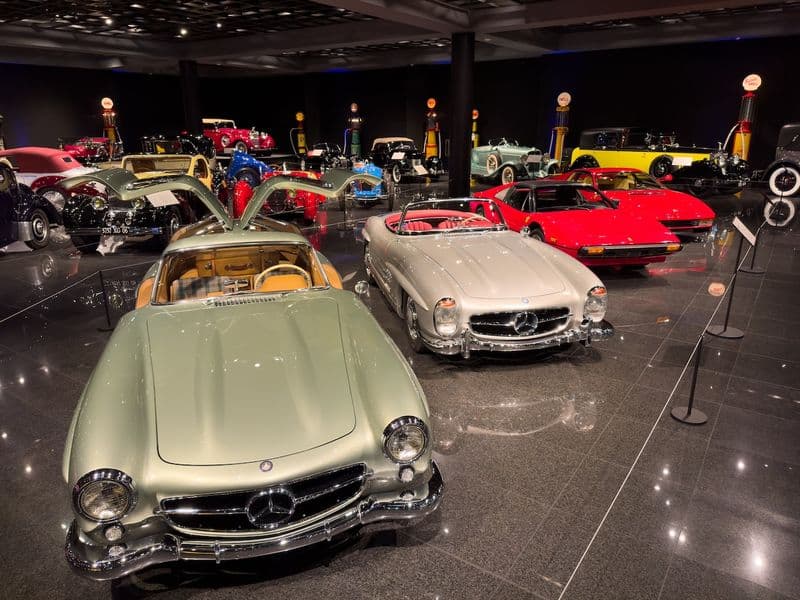
Vehicles with verifiable scarcity (production runs typically below 500), provenance integrity (factory records, marque-club registries, racing pedigree), and global buyer breadth. In practice that points at HAGI Top constituents: pre-1970 racing Ferraris, modern halo Ferraris (288 GTO, F40, F50, Enzo, LaFerrari), air-cooled Porsche 911s with documentation, the McLaren F1, Mercedes Gullwings and select 300SLs, and a thin layer of pre- and early-postwar Aston Martins. Marque- specific guides cover each in detail.
Q: How are collector car gains taxed?
The IRS classifies collector cars as collectibles under IRC §1(h)(4). Long-term gains are taxed at the lesser of 28% or the ordinary marginal rate. The 3.8% Net Investment Income Tax can stack for high earners. Short-term gains are taxed as ordinary income. Whether the 28% cap applies also depends on whether the taxpayer is classified as a dealer, investor, or hobbyist, a fact-and-circumstances determination. Heirs benefit from the standard §1014 step-up in basis at death.
Q: Can I 1031 exchange one classic car for another?
No. The Tax Cuts and Jobs Act of 2017 limited Section 1031 to real property only, effective January 1, 2018. Personal property (including collector cars, art, equipment, and aircraft) was permanently removed from the provision. The change does not sunset. Older articles suggesting you can exchange one Ferrari for another and defer gains are citing a rule that hasn’t existed in over seven years.
Q: What’s the minimum investment to participate?
Direct ownership at the investment- grade tier typically starts around $250,000 for sound entry-level halo cars, runs $500,000 to $2 million for serious Tier 2 modern halos (F40, F50, air-cooled 911 RS variants), and into eight figures for Tier 1 blue chips. Structured vehicles (single-car SPVs, diversified pools, family-office funds) generally set minimums in the $50,000–$250,000 range and handle custody, certification, and exit timing professionally.
Q: How do collector cars compare to other alternative investments?
In 2024, classic cars (+1.2%) outperformed fine art (-18.3%), fine wine (-9.1%), and rare whisky (-9.0%), while trailing watches (+5.1% in 2025) and the S&P 500 (+23.3%). Over 10 years through mid-2024, classic cars returned roughly 118% versus rare whisky’s ~280%, fine art’s 56%, and the S&P 500’s 187%. The distinguishing feature isn’t return magnitude. It’s behavior during macro shocks, where collector cars have historically held value while equities drew down. The case for inclusion is diversification, not outperformance.

Joseph Chappius — Automotive Journalist
Fifteen years in wealth management. Now writing about collector cars, alternative assets, and the stories behind them. All articles →